

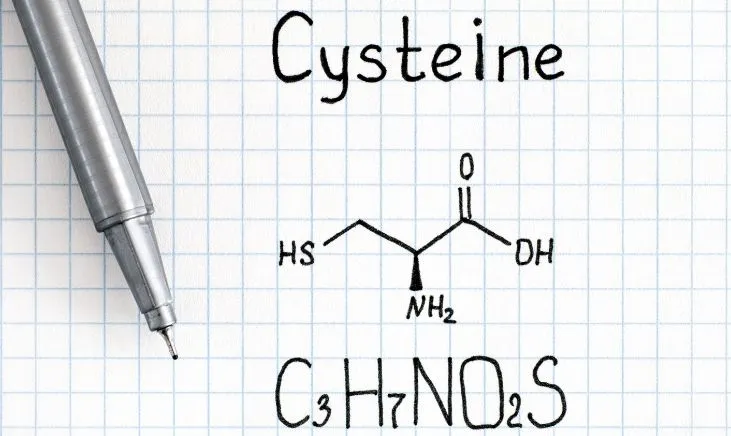
Cysteine is a sulfur-containing amino acid synthesized de novo in small amounts. Under certain physiological conditions, such as pregnancy and growth, it becomes dietarily essential and can be obtained from cheese, poultry, wheat germ, and more. Cysteine is necessary for the synthesis of the antioxidant glutathione, male fertility, respiratory health, blood sugar regulation, and cancer prevention.
Quick Look
- Cysteine is a conditionally essential amino acid synthesized de novo but becomes dietarily required under certain physiological circumstances.
- L-cysteine is the natural form of the amino acid, while N-acetyl cysteine is an acetylated variant that contains an acetyl group for enhanced bioavailability.
- Benefits of NAC supplementation include more robust antioxidant defenses, increased fertility, and improvements in respiratory symptoms.
- A standard dose of L-cysteine is 500 mg/day, but safe doses can go as high as 3,000 mg/day for specific respiratory conditions.
- Side effects from taking cysteine supplements aren’t common, but they can interact with certain medications.
What Is Cysteine?

Before we get into cysteine’s details, let’s ensure we’re on the same page with the basics. Amino acids (AAs) are the building blocks of functional proteins. They comprise three categories:
- Essential: AAs that cannot be synthesized endogenously and are dietarily required.
- Non-essential: AAs that can be synthesized endogenously from other amino acids in the body. For example, glycine is synthesized from choline, serine, hydroxyproline, and threonine.
- Conditionally (semi) essential: These AAs can be synthesized endogenously in small amounts but become essential under specific physiological periods of growth, such as pregnancy, adolescent growth, or recovery from trauma.
Here’s a breakdown of the 20 amino acids and their respective classifications.
| Essential | Non-essential | Conditionally essential |
|---|---|---|
| Phenylalanine | Alanine | Arginine |
| Valine | Aspartic acid (aspartate) | Cysteine |
| Tryptophan | Asparagine | Glutamine |
| Threonine | Glutamic acid (glutamate) | Glycine |
| Isoleucine | Selenocysteine | Proline |
| Methionine | Serine | |
| Histidine | Tyrosine |
So, what is cysteine?
Cysteine is classified as a conditionally essential amino acid. Under normal physiological conditions, cysteine can be produced endogenously in small amounts but becomes essential under certain physiological or pathological conditions. It’s synthesized from two other amino acids:
- Serine
- Methionine
Cysteine is a sulfur-containing proteinogenic amino acid with a reactive thiol side chain, giving it several functions not inherent to other proteinogenic amino acids. For example, cysteine can form disulfide bonds with other cysteines—an essential process required for promoting protein folding and stability. Reactive cysteine residues also drive its ability to act as an antioxidant, scavenging and quenching free radicals.
Key takeaway: L-cysteine is a conditionally essential amino acid that is dietarily required under certain psychological or physiological states. It is one of two sulfur-containing amino acids that is essential for the synthesis of the antioxidant glutathione.
L-Cysteine vs N-Acetyl Cysteine (NAC)
With respect to cysteine, there are two similar compounds you’ll come across: L-cysteine and N-acetyl cysteine, or NAC for short. NAC exhibits many of the same benefits as cysteine, but its structure is slightly different.
- L-cysteine: This is the natural form of this amino acid found in food and synthesized de novo. It’s essential for protein synthesis, detoxification, immunity, sleep, and more.
- N-acetyl cysteine: NAC is an acetylated variant and precursor to L-cysteine. It shares the same basic structure with cysteine with the addition of an acetyl group for enhanced bioavailability. NAC is essential for glutathione synthesis and is often used clinically as an expectorant to break up mucus and improve respiratory symptoms. Some research also shows benefits for certain psychiatric and neurological disorders involving oxidative stress and inflammation.
Key takeaway: L-cysteine is the natural form of the amino acid found in food and synthesized de novo. NAC is a synthetic variant of L-cysteine found in supplements that elicits similar effects.
Health Benefits of Cysteine

- Acts as an Antioxidant and Supports Glutathione Synthesis

Cysteine plays a dual role in protecting the body against free radicals. It has inherent antioxidant properties itself, but along with glutamine and glycine, cysteine is needed to synthesize glutathione (GSH), arguably the most potent antioxidant in the human body.
Its first role is as an antioxidant. Cysteine can scavenge and quench free radicals to reduce oxidative stress and mitigate the downstream adverse effects of oxidative stress.
Secondly, it’s a precursor to glutathione, a powerful antioxidant extensively studied for its ability to reduce lipid peroxidation of cellular membranes and other targets known to occur with oxidative stress. NAC is a by-product of GSH and offers immense benefits for reducing cellular damage due to its cysteine residues and its role in glutathione maintenance and metabolism.
Oxidative stress arises when there is an imbalance between the production and accumulation of reactive oxygen species (ROS); the production of free radicals exceeds the body’s ability to detoxify or neutralize reactive products. Although there are varying degrees of oxidative stress, it’s an underlying pathology in several diseases, including:
- Atherosclerosis
- Diabetes
- Cancer
- Metabolic disorders
- Cardiovascular diseases
However, studies suggest cysteine can support immune function by increasing GSH levels. Short-term supplementation with NAC could lead to prolonged strengthening of immune defenses in certain populations.
Key takeaway: L-cysteine is required for glutathione synthesis and may help reduce levels of oxidative stress by quenching free radicals.
- May Boost Fertility and Support Pregnancy

Supplementation during pregnancy can be dicey, but studies show that NAC is safe for use during pregnancy. Some research suggests that NAC can be an effective adjuvant in women with PCOS-related and unexplained female infertility. It could offer more benefits for women struggling with infertility who have a high BMI, insulin resistance, and oxidative stress.
This may be partly due to its ability to boost levels of GSH, which has positive effects on insulin secretion and resistance, which is believed to be linked to PCOS.
- May Improve Respiratory Symptoms

Thanks to its antioxidant and expectorant properties, NAC may offer benefits for relieving some respiratory symptoms. As a potent expectorant, it can loosen mucus and thin secretions in the airway to support better airflow. Some research shows NAC can reduce the severity and frequency of wheezing and respiratory attacks by increasing GSH levels and thinning mucus in the bronchial tubes.
NAC is especially helpful for people with chronic obstructive pulmonary disease (COPD) who experience oxidative damage and inflammation in lung tissue, which leads to airway constriction, shortness of breath, and coughing/wheezing. Some research suggests NAC can relieve some symptoms of COPD and prevent or reduce decline in lung function.
Additionally, people with chronic bronchitis can also benefit from cysteine supplementation. Bronchitis arises when the mucous membranes in the lungs’ bronchial passageways become inflamed, leading to reduced airflow to the lungs. As an expectorant, cysteine helps to thin the mucus in the bronchial tubes and boost glutathione levels, thereby decreasing the severity and frequency of bronchitis symptoms.
Key takeaway: L-cysteine’s antioxidant and expectorant properties may help reduce and/or relieve symptoms of various respiratory diseases, including COPD and bronchitis.
- Supports Detoxification

Cysteine isn’t typically something we think about for detoxification. Still, research suggests that it not only protects organs from free radical damage but may also reduce specific side effects associated with some medications/drugs, specifically acetaminophen.
NAC is used clinically to treat acetaminophen toxicity if given within eight hours of ingestion and acute liver failure.
- May Prevent Cancer

Although no concrete evidence suggests NAC can be used as a cancer treatment, some research suggests it may defend against cancer by neutralizing free radicals that lead to DNA damage.
Clinical studies show that NAC can help offer protective effects against certain types of cancer by:
- Regulating expression of genes involved in oxidative stress and inflammation
- Reducing the production of inflammatory cytokines and proteins
- Increasing antioxidant status
- Stabilizes Blood Sugar

Cysteine has been shown to support the body’s natural ability to regulate blood sugar. Glucose levels naturally fluctuate throughout the day, but chronically high blood sugar can lead to several adverse effects and health complications, including:
- Heart disease
- Heart attack and stroke
- Kidney damage
- Nerve damage
- Eye damage
- Skin problems
High blood glucose levels are also a contributing factor to obesity and inflammation, which can damage insulin receptors and increase the risk of developing type 2 diabetes.
A 2009 animal study showed that L-cysteine could reduce blood glucose levels and specific markers of vascular inflammation in diabetic subjects. Another study demonstrated that NAC can stabilize blood sugar by lowering inflammation in fat cells and improving insulin resistance. Intact and properly functioning insulin receptors are important for removing glucose from the bloodstream and maintaining glucose levels within a normal range.
Foods With Cysteine
Dietary cysteine is naturally found in many high-protein foods, but quantities aren’t usually substantial. Some cysteine-rich foods include:
- Ricotta cheese
- Cottage cheese
- Yogurt
- Pork
- Chicken
- Turkey
- Duck
- Wheat germ
- Granola
- Oat flakes
As mentioned previously, cysteine can be synthesized de novo, but for that to happen, you need sufficient amounts of three B vitamins:
- Folate (B9)
- Vitamin B6
- Vitamin B12
These nutrients can be found in various foods, including beans (chickpeas, pinto beans), lentils, spinach, avocado, bananas, wild-caught tuna and salmon, and liver.
Recommended Dosage for NAC Supplements

The recommended dosage for NAC dietary supplements varies based on the condition being treated.
The following forms of L-cysteine are available:
- NAC aerosol spray: Commonly used for treating respiratory conditions or pulmonary disease. A prescription is required for this form.
- Cysteine/NAC tablets or capsules: L-cysteine tablets or capsules are commonly used as prevention to sustain antioxidant defenses and overall health and well-being.
- For maintenance: 500-600 mg per day
- For respiratory illness: 200–600 mg, twice daily
- For COPD: 600 mg, twice daily (some studies suggest up to 2,800 mg per day for up to 3 months)
- NAC liquid solution
- NAC topical solution
- L-cysteine amino acid powder
Remember that cysteine isn’t available in supplement form—you will only find NAC.
Additionally, because endogenous cysteine synthesis depends on adequate intake of B vitamins, taking a B-complex supplement will ensure your body has what it needs.
Risks and Side Effects
When taken in appropriate amounts, L-cysteine and NAC are safe for most adults. However, interactions and side effects can still happen.
Some research suggests that high doses (over seven grams) of L-cysteine can be toxic to human cells, especially mitochondria. However, studies have shown that up to 3,000 mg/day of NAC for certain respiratory conditions was safe and well tolerated.
People taking certain medications should also avoid taking NAC or L-cysteine:
- Nitroglycerin
- Activated charcoal
- Chloroquine (Aralen)
- Antihypertensive drugs
- Anticoagulants/antiplatelet drugs
Although amino acid supplement side effects aren’t extremely common, some people may experience mild side effects from NAC supplements:
- Dry mouth
- Headache
- Diarrhea
- Dizziness
- Nausea and vomiting
- Indigestion
- Sweating
- Fatigue