

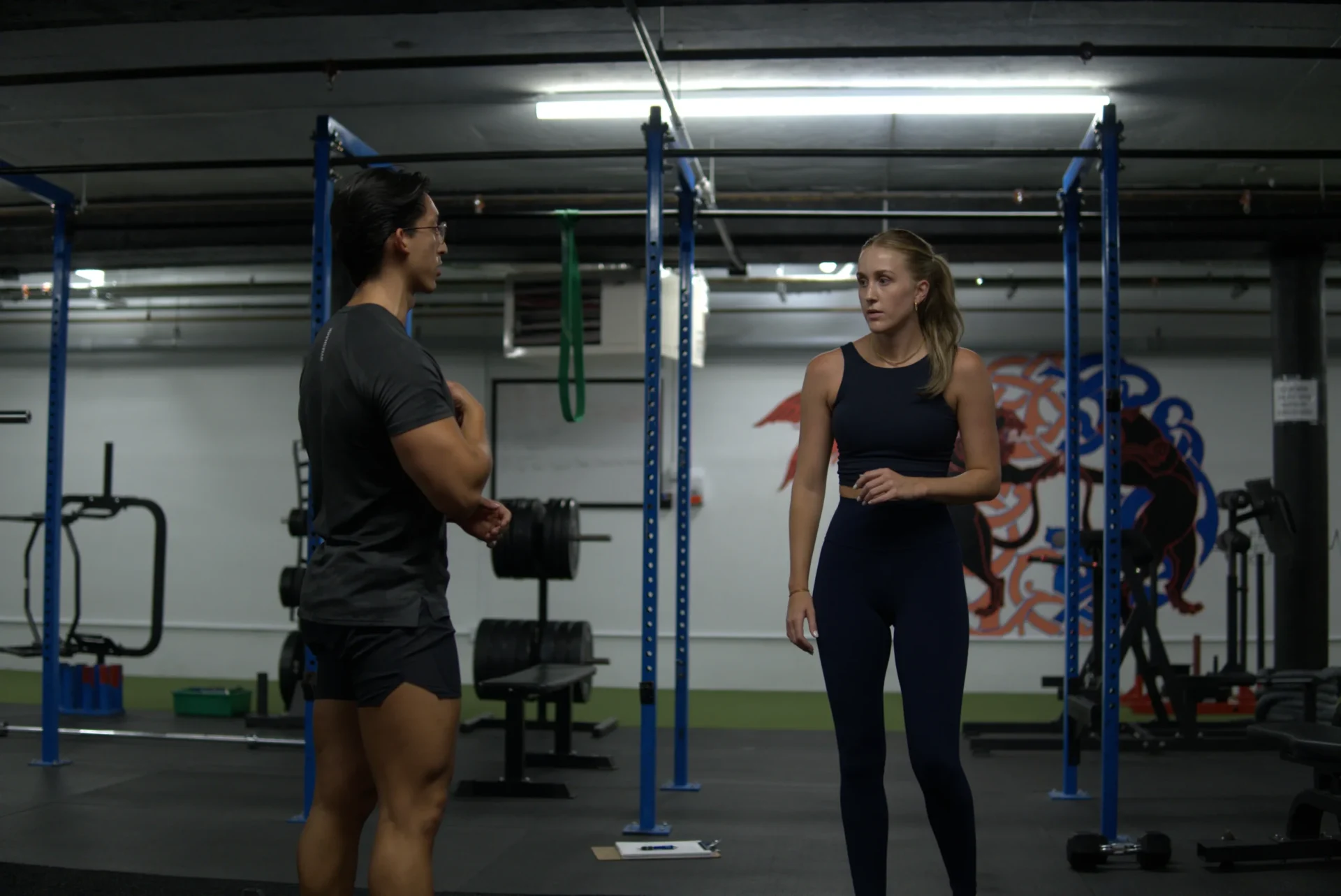
Personal training rates raise questions about value. You’re not just paying for someone to count reps or demonstrate exercises you could find on YouTube. The investment covers systematic program design, injury prevention through form correction, accountability systems that maintain consistency, and expertise that would take years to develop independently.
Research shows that trained individuals achieve significantly better results than those working out alone. A 12-week study comparing personal training to individual workouts found that only the trainer-led group showed significant fat reduction and injury prevention, demonstrating measurable value beyond basic instruction.
Key Insights:
- Personal training fees reflect years of education, certification, ongoing learning, and accumulated coaching experience.
- The cost includes program design, progress tracking, responsive adaptation, form correction, and comprehensive accountability.
- Research demonstrates that trainer-led exercise produces superior results in fat loss, injury prevention, and adherence compared to self-directed training.
Expertise and Education Costs
Personal trainers invest thousands of dollars and hundreds of hours before training their first client. Certification programs cost between $500 and $2,000 and require passing comprehensive exams covering anatomy, physiology, biomechanics, nutrition, and exercise programming.
Most quality trainers hold bachelor’s degrees in kinesiology or exercise science, providing foundational knowledge in human movement and training adaptation.
Continuing education requirements maintain certification validity. Trainers attend workshops and study new research to stay current. This ongoing education costs hundreds to thousands annually.
Years of hands-on experience build a well-trained eye for pattern recognition. A trainer working with 100 clients develops expertise in identifying form issues and tailoring programs to different body types.
Time Beyond Your Training Sessions
Your training session is only a small slice of the overall work your trainer puts in. A great deal of planning and strategizing happens long before you arrive and long after you leave. This behind-the-scenes effort shapes the quality of your progress and the smoothness of your training journey.
- Before each session, trainers review your recent performance, study your movement patterns, and map out a session that fits your current energy, goals, and recovery status.
- Between sessions, they track your progress, identify patterns in your results, and adjust your program so you keep moving forward without burnout.
- For new clients, program design often takes several hours since a custom plan must reflect your goals, lifestyle, limitations, and training history in a way that feels doable and effective.
- Trainers spend time researching solutions for any challenges you may have, such as mobility issues, plateaus, or scheduling constraints.
- Communication outside sessions adds steady support. For example, answering your questions, giving quick feedback, and offering guidance that keeps you consistent and motivated
Individualized Program Design
Generic workout templates don’t account for your specific limitations, injury history, equipment access, or schedule constraints. Personal trainers create programs tailored to you and your life circumstances.
Initial assessment reveals mobility restrictions, strength imbalances, and movement compensations. Your trainer designs programming that addresses these issues. Someone with tight hip flexors receives a different exercise selection than someone with shoulder mobility limitations.
Goal-specific programming optimizes exercise selection, volume, intensity, and frequency. Fat-loss programming differs from strength-building, which differs from athletic-performance training.
Lifestyle integration ensures your program fits your schedule and recovery capacity. A parent working 60-hour weeks requires different programming than a college student with flexible hours.
Accountability Systems That Drive Results
Scheduled training sessions create an external structure that maintains consistency. You show up because someone expects you to and has prepared for your session.
Progress tracking provides objective evidence of improvement. Your trainer records weight lifted, reps completed, body measurements, and performance benchmarks. Seeing concrete progress maintains motivation when subjective feelings suggest you’re stuck.
Between-session check-ins extend accountability beyond scheduled workouts. Your trainer might ask about sleep quality or nutrition adherence. Knowing someone will inquire about your choices influences decisions in real time.
Financial investment creates additional commitment. Having paid for sessions motivates you to extract full value. This is why personal training works better than self-directed efforts. The accountability system addresses the fundamental challenge of maintaining consistency.
Injury Prevention and Form Correction
Poor form repeated over months can cause chronic issues that eventually require medical treatment. Personal trainers prevent these problems by teaching proper movement patterns and correcting compensations before they lead to injury.
- Real-time feedback catches form breakdown during sets. Your trainer spots subtle shifts in positioning, cues corrections, and ensures you maintain proper technique under fatigue.
- Smart progression prevents training errors that cause acute injuries. Trainers know when you’re ready to add weight or advance to more complex movements.
- Working around existing injuries requires specialized knowledge. Trainers modify exercises to maintain training stimulus in healthy areas while allowing injured structures to heal.
The medical costs of treating training-related injuries often exceed the cost of years of personal training. Prevention delivers significant long-term financial value.
Knowledge Transfer and Long-Term Value
Quality trainers do more than guide your reps. They teach you how to train with intention and clarity. Every session is an opportunity to learn why certain exercises are chosen, how form cues influence movement, and how small adjustments can change how your body responds.
Over time, you begin to understand the logic behind your program rather than simply following instructions.
- You learn to notice what effective training feels like, which muscles should be working, and how to read your own recovery signals so you can train smarter.
- Your body awareness grows as you understand movement patterns, breathing, tempo, and how to adjust technique for better performance and safety.
- This ongoing knowledge transfer shifts personal training from an endless dependency to a foundation-building phase that empowers long-term independence.
- Many clients eventually transition to more independent training because they understand how to structure sessions, progress safely, and stay consistent.
Problem-solving skills develop as your trainer walks you through ways to troubleshoot plateaus, refine technique, or adapt training when life gets busy.
Comparing Cost to Alternative Options
DIY fitness appears cheaper on the surface, but often costs more in the long term due to wasted time, inefficient programming, and injury treatment. The real difference between personal training and DIY fitness extends beyond financial cost to results achieved per dollar spent.
Gym memberships cost $30-$100 monthly and often go unused. Clients paying for personal training show up consistently because sessions are scheduled. The accountability alone justifies a significant cost difference for people who struggle with self-directed consistency.
Online coaching programs cost $100-$300 monthly but lack in-person form correction and responsive adaptation. Generic programs cannot account for your specific limitations.
Group fitness classes provide structure and community at a lower cost but cannot offer individualized attention or program customization.
The question isn’t whether personal training costs more than alternatives. The question is whether the superior results, injury prevention, and time efficiency justify the investment for your unique situation.
Final Thoughts
Personal training costs reflect expertise, education, preparation time, individualized programming, and comprehensive support. You’re investing in years of knowledge, systematic progression, injury prevention, and behavioral change.
The investment makes sense when you value your time, want to avoid injuries, need external accountability, or pursue specific goals requiring expert guidance. How trainers adapt programs as you progress ensures your training evolves with your experience and fitness capacity.
Invest in Results, Not Just Sessions
Stop viewing personal training as an expense and start seeing it as an investment in your health and quality of life. At EverFlex Fitness, we provide personal training in Calgary that delivers measurable results through expert programming and comprehensive support.
Our trainers bring extensive education, years of coaching experience, and commitment to your success. We design programs that fit your body, schedule, and goals while providing the accountability needed to achieve results.
Schedule your consultation today and discover how professional training delivers value that extends beyond the hourly rate.
Frequently Asked Questions
How long do I need to work with a personal trainer?
This depends on your goals and learning pace. Some people work with trainers for a few months to lay a foundation before transitioning to independent training. Others maintain ongoing coaching relationships because they value continued accountability and expert guidance.
Can I negotiate personal training rates?
Some trainers offer package discounts for purchasing multiple sessions upfront. Session frequency discounts are common. Experienced trainers with strong client demand typically maintain consistent pricing. Focus on finding a trainer whose expertise fits your needs within your budget.
What if I can’t afford personal training?
Consider starting with fewer sessions per week, perhaps once weekly supplemented by independent workouts. Semi-private training with one or two other people costs less than one-on-one sessions. Many trainers offer online coaching at reduced rates compared to in-person training.