

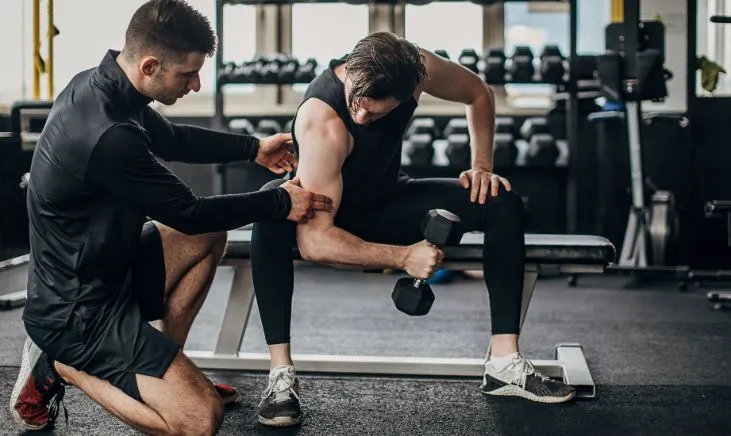
Want to know how to find a personal trainer who can help you achieve your fitness goals? This guide will take you through the steps of finding the best personal trainer compatible with a coaching style, approach, and expertise aligned with your target of fat loss, muscle gain, and so on.
Quick Takeaway:
- Finding a personal trainer is a lot easier in today’s society, with countless online options and local gyms offering sessions.
- Hiring a personal trainer brings many benefits, such as customized programming, accountability, guidance, and expertise to help you reach your goals.
- Evaluate potential trainers by researching and scheduling a consultation to determine if they’re a good fit for you. Assess coaching style, personality, budget, and scheduling.
Finding a Personal Trainer
Finding a personal trainer is much easier nowadays, thanks to the emphasis on caring for one’s health in recent years. Much of this has been emphasized since the COVID pandemic and the growth of social media’s influence on creating an aesthetic appearance and improving functional performance through exercise to enhance quality of life.
Thanks to these factors, interest and involvement in the fitness world has grown tremendously, with more than a few sites offering personal training and trainers on social media presenting the same. Of course, this doesn’t include the opportunity to train at your local gym, which nearly always has trainers available.
The best trainers will have a backing through their reputation, gym, or education. Consider doing your research on a trainer to examine whether they are a right fit for you and your goals. At the consultation with a personal trainer, you can ask questions and converse with them to determine this as well.
Where to Find a Personal Trainer:
- Ask for referrals from friends, family, or healthcare providers.
- Research online and check reviews from previous clients.
- Consider working with a local personal trainer or online personal trainer.
- Look for trainers specializing in your fitness goals, such as weight loss or strength training.
- Check your local gym to see if they have any available trainers.
The Benefits of Working With a Personal Trainer

There are numerous benefits of working with a personal trainer. From customized programming to providing accountability, a personal trainer can guide clients on a successful fitness journey.
Customizable Programming
A fitness coach can customize workout programs catered to a client’s unique goals and fitness level.
Unlike generic workout guides you find on social media, the personalized workouts created by personal trainers are often conformed to align with the client’s goals. For example, if one client wants to build more muscle mass, specifically the upper body, they will not have the same program as the client who wants to lose fat and improve muscle definition in the glutes and legs. Both clients will require a customized program to promote results in these areas.
Oftentimes, programming coincides with nutritional support given by the personal trainer. A client wanting to lose fat will be in a caloric deficit, while a client wishing to increase muscle mass will be in a caloric surplus. If you have specific diet restrictions or tendencies, a trainer can guide you in aligning these with your caloric goals.
Guidance & Support
Personal trainers have their own experience in the fitness world. Having had this experience, they know how to utilize it to guide others in how to be successful in their fitness journeys.
A trainer can lead clients away from scams that claim a successful method to lose ten pounds in ten days, for example. They can support their clients throughout their fitness journey, which will have challenging times where it’s hard to stick to hitting the gym or a caloric goal. Personal trainers can provide helpful guidance and support to clients on how to stay on track, get out of plateaus, and achieve their fitness goals from personal and learned expertise.
Accountability
One of the most essential parts of success in one’s fitness journey is accountability. Whether with one’s self or from another person, friend, or trainer, accountability can keep clients aligned with the goal they set out to achieve.
Accountability can look different depending on the client. Some clients prefer strict and no-nonsense feedback, while others may prefer a friendly guiding hand.
How you prefer to be coached and given this feedback should be discussed at the consultation with the trainer. Some trainers are known to use one or both of these coaching methods, so this can determine how you choose your trainer to align with what works best to keep you accountable.
Expertise
A trainer’s expertise can make or break a client’s fitness journey experience.
Most personal trainers receive certifications and continued education from organizations like the International Sports Sciences Association (ISSA) or the National Academy of Sports Medicine (NASM). Others may have an educational background in exercise science, kinesiology, sports medicine, and physical education that can be profitable for solidifying their expertise and gaining clients.
Trainers are not required to have a certification to work, although most employers require it. It’s important to note that there are many qualified personal trainers who have a certification and no college background. Do your research, examine their reputation, and check if they have success stories.
With their qualified expertise, a personal trainer can provide their clients with informative feedback and guiding steps to enhance progress and promote success. Sometimes, they may be able to offer more in-depth nutritional guidance depending on their background and education.
Setting Your Goals and Expectations
Setting your goals and expectations with your trainer at the consultation is important. Some common health and fitness goals include:
- Lose weight
- Improve stress management
- Build muscle
- Enhance overall health
With these goals and expectations set, the personal trainer can then set achievable short- and long-term goals for you. They can personalize workouts and create a program that suits your goals. Depending on your access to equipment, personal preferences, or goals, they can insert weight-lifting, bodyweight, and cardio exercises into your programming.
Set Your Goals and Expectations:
- Define your fitness goals and what you want to achieve with a personal trainer.
- Consider your current fitness level and what you need to work on.
- Set specific, measurable, and attainable goals for your fitness journey.
- Determine what type of training you need, such as weight loss or strength training.
Evaluating a Personal Trainer

The best personal trainers vary dramatically depending on education, reputation, and experience. If you’re searching for a potential trainer, it’s important to research and examine their qualifications. At the consultation with the trainer, you can get a feel of their experience and whether you would mesh well together.
Most trainers offer a personalized approach to their coaching to offer clients success in their fitness journey. Typically, the first session will be where the trainer examines a client’s form and technique. Using the feedback from this session, they will adjust a client’s workout program to better align with the current fitness level.
A great coach will not guilt trip or bring you (the client) down. The role of the personal trainer is to be a guiding hand. Sometimes, that means being strict, as the accountability role is often passed on to the trainer. This translates to the trainer keeping the client on route to success even when the client is not feeling up to it.
Finding a trainer who knows when to be unyielding and when to give the client a break is crucial to establishing balance and sustainability en route to a healthy lifestyle.
What to Look for in a Good Personal Trainer
- Look for a qualified personal trainer with certifications and experience.
- Consider their education and training in exercise science or a related field.
- Check their reputation and reviews from previous clients.
- Ensure they have experience working with clients with similar goals and needs.
Red Flags to Watch Out For
- Be wary of trainers who promise unrealistic results or quick fixes.
- Avoid trainers who are pushy or aggressive in their sales approach.
- Be cautious of trainers who don’t listen to your needs or concerns.
- Watch out for trainers who are unprofessional or unresponsive.
The Importance of a Consultation
Setting up a consultation with a personal trainer can help determine whether you both are a good fit. You can discuss goals and expectations with the trainer, ask questions, and get a feel for the trainer’s approach and style.
Consultations are great for laying out any concerns you may have, discussing training plans, and getting comfortable with your potential new trainer.
Questions to Ask a Potential Personal Trainer
Before, during, or after your consultation, you may have some nagging questions to ask a personal trainer. Asking questions is critical to determine whether a trainer is a good fit for you and to get an idea of what your fitness journey may look like.
Use these questions to ask a potential trainer to get a feel for their experience, style, and approach to coaching clients.
Questions to Ask Your Trainer:
- What experience do you have working with clients with similar goals and needs?
- What approach do you take to training, and how will you tailor your program to me?
- How will you help me stay motivated and accountable?
- What kind of support and guidance can I expect from you?
Choosing the Right Personal Training Environment

Your environment can be a game changer and drastically determine your success on your fitness journey. One person may benefit from a competitive powerlifting gym environment. Other people may enjoy the comfort of their home gym and online personal training.
Determining what environment works best for you, or even considering hybrid training with one session at the gym in-person with your trainer and one session online, is important. Speak with potential trainers to see what they offer in terms of in-person, online, and hybrid workout sessions.
Picking Your Personal Training Environment:
- Consider the type of facility or gym the trainer works in.
- Ensure it’s clean, safe, and well-maintained.
- Check if they have the necessary equipment and resources.
- Consider the atmosphere and whether it’s conducive to your fitness goals.
Try Before You Buy
Have you ever considered trying before you buy with personal training? Many trainers offer a free consultation and training session. This helps bring in potential clients and allows clients to get a feel of their training and coaching style.
Trial Sessions:
- Consider trying out a personal trainer before committing to a long-term contract.
- Ask about their availability and scheduling.
- Take a training session to get a sense of their style and approach.
- Ensure you’re comfortable with the trainer and their methods.
Working With Personal Trainers: What to Expect
Entering a health and fitness journey can feel overwhelming at first, especially if you’ve never worked out at a gym or had coaches before. Working with a personal trainer with fitness and nutrition expertise can be extremely beneficial for placing you on the path to success in reaching your goals.
What to Expect:
- A personal trainer will create a customized exercise program tailored to your fitness goals.
- They will provide guidance, support, and motivation to help you stick to your fitness routine.
- You can expect regular training sessions and progress tracking.
- A good personal trainer will help you develop a healthy relationship with exercise and improve your overall well-being.
Getting the Most Out of Personal Training

Although a personal trainer can provide loads of information and hands-on experience to help you reach your goals, they can’t make you attend your training sessions. They can’t make you stick to your caloric or food goals, get quality sleep every night, drink enough water, or be active on days you’re not with them.
A personal trainer can be your guide, but you have to be the one to put in the work, in and out of the gym, if you want to achieve your health and fitness goals.
Staying on Track:
- Be consistent and committed to your training sessions.
- Communicate openly with your trainer about your needs and concerns.
- Set realistic goals and celebrate your progress.
- Be patient and persistent, and you’ll see results from your personal training.
Final Thoughts
Wanting to know how to find a personal trainer is the first step to getting started on your health and fitness journey. So many online services and local gyms offer sessions with potential trainers. Finding which trainer can align you to your goals is the tricky part.
Use our guide to find a personal trainer that matches your vibe with an aligned coaching style and approach to your goals. From there, be prepared to change your life for the better and hit new milestones!