

Seeing athletes, bodybuilders, or even friends at the gym taking these supplements makes you wonder—what is glutamine? What is creatine? And should I be taking them?
A general understanding of these compounds, including the different types, pros and cons, and key differences, will help you make the most informed decision when choosing the right supplements. So, let’s dive into the world of glutamine and creatine.
Creatine Overview

Creatine is an organic compound found mostly in our muscles. It plays a vital role in energy production and is considered the most effective supplement for building muscle and increasing performance by the International Society of Sports Nutrition.
Different Types of Creatine Supplements
You can take your daily creatine supplement in a few different ways. The most common is a powder mixed with water, but you can also get creatine gummies or chews.
Creatine is also commonly combined with other supplements, like pre-workout, and creatine monohydrate powder is the most well-studied form of this nutrient. When creatine monohydrate is taken orally, ~99% ends up in muscle tissue or urine through normal digestion. Evidence shows that creatine monohydrate is the best choice for creatine supplementation as it has been consistently studied and backed by research.
Other forms of creatine have made their way to the market as alternatives to creatine monohydrate. However, there is currently insufficient evidence to suggest that they are better than creatine monohydrate. Some of these creatine salts include:
- Creatine HCl
- Creatine Ethyl Ester
- Buffered Creatine
Benefits of Creatine
Creatine plays a significant role in muscle energy production. Our body uses adenosine triphosphate (ATP) to power our muscles, and creatine is responsible for regenerating ATP.
The more creatine you have, the longer you can delay muscle fatigue, allowing you to optimize your performance, resulting in:
- Increased muscle protein synthesis and faster muscle growth
- Reduced risk of muscle injury
- Optimized performance during high-intensity training
- Improved brain function

Potential Side Effects
The evidence shows no serious adverse health effects associated with taking creatine in the short or long term. However, you should consult your healthcare provider before starting new supplements, as the main reported side effect is water retention.
Glutamine Overview

L-glutamine is the most abundant amino acid in the body. Amino acids are the necessary materials for building proteins. Conditionally essential amino acids are nutrients that our body can make under normal circumstances, but during times of stress or illness, they cannot, or production is reduced, so we need to consume them from our diet.
Of all the amino acids found in our muscles, glutamine is the most abundant. Like other amino acids, it is involved in muscle protein synthesis. Glutamine is also used as fuel for cells in the immune system and helps to maintain homeostasis.
Different Types of Glutamine Compounds
You may have heard the term L-glutamine being used synonymously with glutamine. This is the form we get through food or supplements, and some products list the ingredients as L-glutamine or simply glutamine.
Glutamine also exists in the form of D-glutamine. This is the same compound but with a different molecular shape. L-glutamine is the form that our body needs to build proteins.
Benefits of Glutamine
Glutamine has become increasingly popular as an exercise supplement because of its association with the potential benefits in:
- Increasing lean muscle mass
- Preventing muscle breakdown during muscle recovery
- Improving the immune system
- Supporting gut health
- Muscle glycogen resynthesis
- Weight loss

Potential Side Effects
Consuming amino acids in normal quantities will not cause adverse side effects, as these are naturally occurring compounds in our bodies. However, they can cause harm when supplemented in large quantities. A study showed that when individuals were chronically consuming glutamine in excess (~40 g/day), there were negative impacts on the body’s metabolic systems.
Key Differences Between Glutamine vs Creatine

Creatine and glutamine are both produced in our bodies naturally and are required for major processes and functions. We can also ingest them both through animal protein foods. However, their roles are very distinct, and their credibility as a sports supplement varies greatly.
Muscle Gain
Creatine aids in building lean muscle mass by increasing the ratio of phosphocreatine to creatine in muscles, boosting training endurance. Glutamine, an essential amino acid, supports muscle growth and amino acid synthesis. Athletes often use protein or amino acid supplements to maintain a positive amino acid balance post-resistance training.
Although animal studies show a connection between glutamine supplements and protein synthesis, this link hasn’t been confirmed in humans.

Exercise Performance
Creatine in skeletal muscles, as phosphocreatine regenerates ATP, provides energy. Increased creatine stores enhance ATP generation for high-intensity training, endurance, and power. A meta-analysis of creatine supplements in athletes showed higher strength gains for bench presses and squats than placebos.
Glutamine’s effects on exercise performance vary. Some studies link glutamine to improved aerobic power and performance, while others show no effect. More research is needed in this area for definitive conclusions.

Muscle Soreness and Muscle Recovery
The impact of creatine supplements on muscle damage and recovery after exercise remains inconsistent. However, a recent meta-analysis and systematic review investigating this topic found that consuming creatine does help with muscle recovery because of its role in decreasing muscle damage indices.
Exercise-induced muscle damage can cause inflammation and soreness. Glutamine decreases this inflammation, which can impact muscle soreness. This amino acid also participates in muscle glycogen synthesis during recovery, which can help prepare your muscles for the next workout.
Should I Take Creatine and Glutamine?
A study investigating the effects on the body composition of glutamine supplements, only creatine supplements, and supplementing with both found a more significant increase in lean body mass in all three supplementation groups than the placebo group. Whether this is due to the synergistic benefits of glutamine and creatine or a single compound remains unknown.
Combining muscle-building supplements can ensure you cover all your bases and maximize muscle synthesis. Since glutamine and creatine play different roles in metabolism and protein synthesis, taking both could potentially increase the positive effects.
Creatine vs. Glutamine: Dosing
There is yet to be conclusive evidence on the best dosing regime for glutamine. Some products recommend 3g/day, while others recommend 5g/day. This range aligns with the dose used in studies assessing glutamine supplementation and body composition.
There are different ways to approach creatine supplements. Some people start with a creatine-loading phase, where high doses are consumed multiple times per day to quickly build up creatine stores, followed by a maintenance phase, where smaller doses are taken to maintain these creatine stores over time.
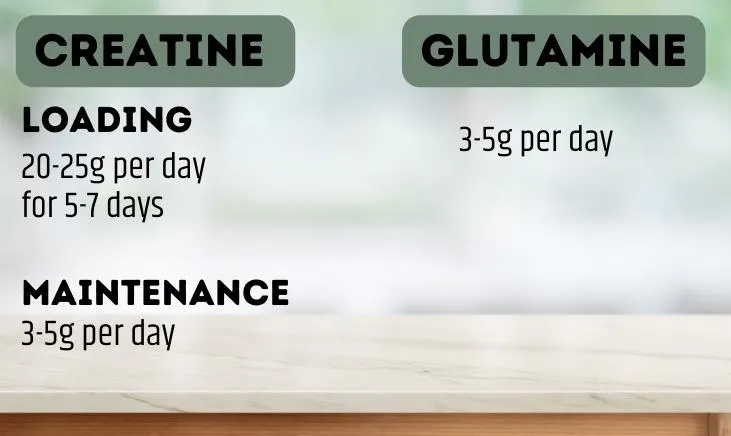
According to research, a loading phase is not necessary to see the benefits of creatine supplementation.
- The loading dose is usually between 20-25g daily for 5-7 days
- The maintenance dose is generally between 3-5g per day
Creatine vs. Glutamine: Which Do We Recommend?
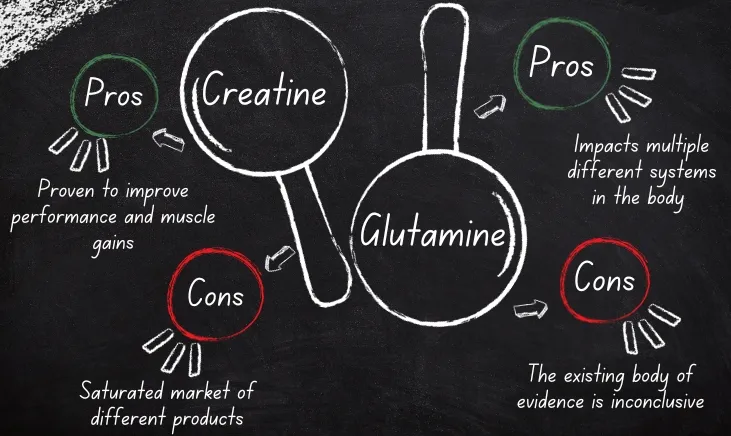
Considering all the research that has been completed, creatine will be the better choice over glutamine. Its role in increasing muscle mass and performance has been well studied for many years, its safety has been established, and many of the products available for sale are credible and reliable.
Our Recommended Glutamine – Thorne L-Glutamine Powder
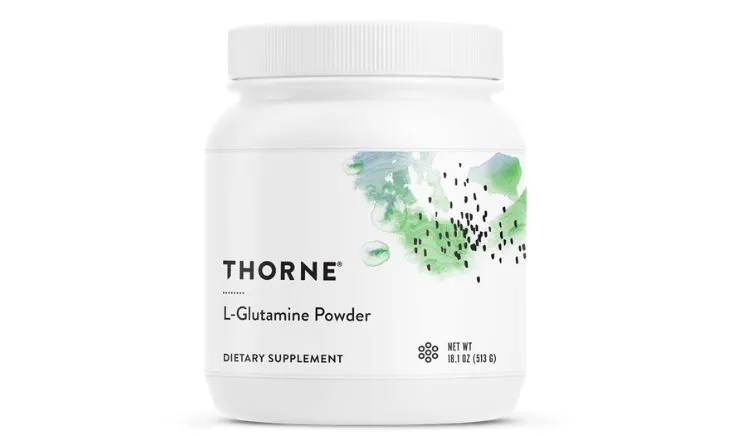
The best supplements are always the safest and most reliable. That’s why we chose Thorne® L-Glutamine powder. Professional athletes use it, and the USADA considers NSF Certified for Sport® to be the best program for ensuring athlete safety. It also contains only pure glutamine with no additives.
Our Recommended Creatine – Thorne Creatine
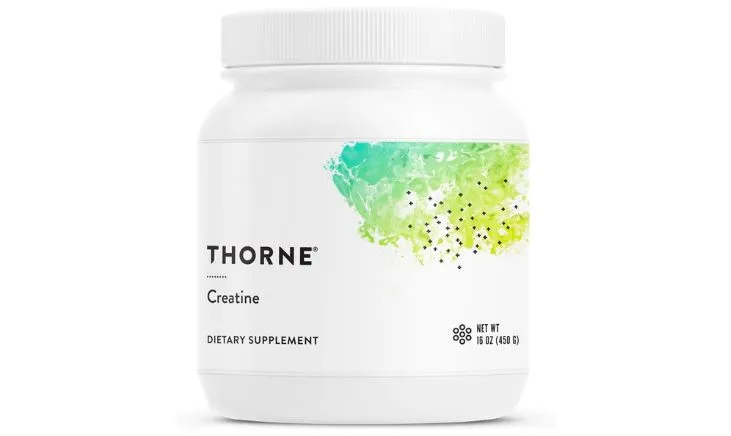
Creatine Thorne® also sells creatine supplement powder, which is a great product. The supplement utilizes creatine monohydrate, is NSF Certified for Sport®, costs only $0.08 per 1 gram of creatine, and contains no artificial colors or flavors.
For a more extensive overview of creatine products, check out our article on the Best Creatine Supplements on Amazon.
Choose the Best Fit for You From Everflex Fitness
When it comes to supplements, there is no one-size-fits-all solution.
When choosing a supplement, it’s important to consider your individual needs and goals. For example, creatine may be your best option if you’re an athlete looking to improve muscle strength and endurance. But L-glutamine might be a better fit if you’re looking to boost energy levels and focus. Other factors to consider include price, ingredients, and potential side effects.
At Everflex Fitness, we understand that everyone’s fitness journey is different. That’s why we offer a variety of high-quality supplements to choose from to help you reach your health and fitness goals.