

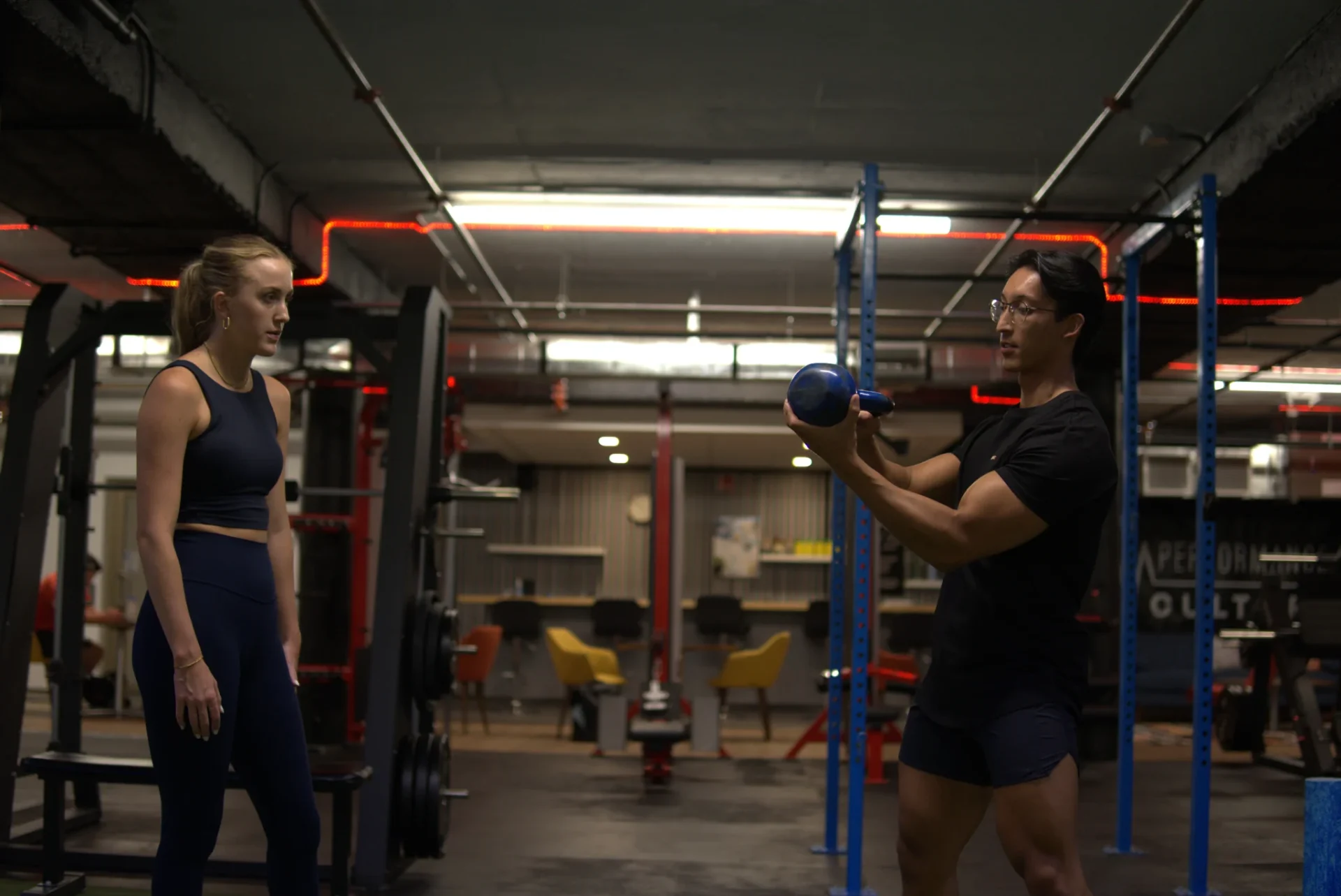
Functional training prepares your body for real-life movements rather than just gym performance. Traditional bodybuilding splits isolate individual muscles through single-joint movements. In comparison, functional training emphasizes multi-joint patterns that mirror how you actually move during daily activities.
Personal trainers typically use a functional training approach to improve your ability to lift groceries, play with kids, navigate stairs, garden, travel, and perform job-related tasks without pain or limitation. Functional training focuses on movement patterns rather than individual muscles, develops stability and mobility simultaneously, and builds strength that transfers to activities outside the gym. This approach particularly benefits people returning to fitness after injury, older adults maintaining independence, and anyone prioritizing quality of life over aesthetic goals.
Key Insights:
- Functional training emphasizes movement patterns like squatting, hinging, pushing, pulling, and rotating that occur in daily activities.
- Trainers incorporate balance, stability, and coordination challenges that improve body control during real-world tasks.
- Programs focus on building strength through full ranges of motion while maintaining proper movement mechanics under various conditions.
What Makes Training Functional
Functional training prioritizes movement quality and real-world application over maximum weight lifted. The question becomes whether training improves your ability to perform daily tasks rather than just gym performance.
Exercises become functional when they train movements you actually use. A squat is functional because you squat every time you sit or pick something up. Isolation work has its purposes, but functional training prioritizes compound movements. Functional training also addresses asymmetries that cause compensation patterns, improving movement quality and reducing injury risk.
Core Functional Movement Patterns
Human movement breaks down into fundamental patterns that occur repeatedly in daily life. Trainers build programs around these patterns, ensuring competence in movements you’ll use regularly.
- Squatting patterns appear whenever you sit, stand, or lift objects from low positions. Training squats with proper mechanics translates directly to these tasks.
- Hinging movements occur during bending to pick things up. Deadlift variations train a healthy hip hinge pattern to protect your lower back.
- Pushing and pulling patterns train your ability to move objects. These are used for opening doors, moving furniture, and countless other daily tasks.
- Carrying and loaded walking might be the most functional training you can do, building grip strength, core stability, and the ability to maintain posture under load. An example of this is carrying groceries from your car into the house.
Balance and Stability Work
Real life rarely includes stable, predictable environments. Functional training incorporates balance challenges that prepare you for uneven terrain and unexpected movements.
Single-leg exercises build the strength and stability required for walking and climbing stairs. Examples include single-leg deadlifts, split squats, and step-ups, which challenge your ability to control your body on one leg. Unstable surface training forces your body to engage stabilizer muscles.
The way personal trainers assess your fitness level includes evaluating balance capacity through single-leg stance and stability during dynamic movements. Anti-rotation exercises train your core to resist unwanted twisting, helping prevent low back injuries during twisting movements.
Multi-Planar Movement Training
Most gym exercises move you forward and backward. Real life requires moving in all directions, including sideways and rotational movements.
Lateral movements train side-to-side strength. Exercises like lateral lunges and side shuffles develop the hip and leg strength needed to change direction and navigate crowded spaces. Rotational exercises train your ability to twist and turn. The trainer’s role in teaching exercise form and technique is crucial in rotational movements, where poor mechanics increase injury risk. Diagonal and combination movements challenge coordination across multiple planes simultaneously.
Loading Functional Patterns
Adding resistance to functional patterns builds strength that transfers to daily tasks. The loading strategy differs from traditional strength training, which focuses purely on maximum weight.
- Moderate loads allow focus on movement quality. Using 60-70% of maximum weight lets you maintain proper mechanics throughout the full range of motion.
- Uneven loading challenges stability. Carrying weight in one hand forces your core to resist sideways bending.
- Tempo manipulation develops strength at different speeds. Slow controlled lowering builds eccentric strength, protecting joints.
- Object-based training using sandbags or awkwardly shaped implements challenges your ability to control unstable loads.
Functional Training for Different Goals
Functional training adapts to various populations. The underlying principles remain consistent, but the application changes based on needs.
- Older adults benefit from functional training, which helps them maintain independence. Programs emphasize sit-to-stand strength, balance, fall prevention, and walking endurance.
- Training around injuries becomes essential as trainers modify exercises around joint limitations. Athletes use functional training to build transferable strength and movement skills.
- Post-rehabilitation clients transition from physical therapy through functional approaches that allow productive training without aggravating healing tissues.
- General fitness clients find functional training directly relevant to making daily activities easier.
Assessing Functional Capacity
Testing functional movement quality can reveal limitations and guide program design. These assessments differ from traditional fitness tests measuring maximum strength. Movement screens identify restrictions and compensation patterns. Watching a client perform bodyweight squats, single-leg balance, and rotation reveals how well the client can move before adding load.
Task-specific assessments test abilities relevant to your goals. Getting up from the floor without using hands indicates lower body strength and mobility. Asymmetry identification compares left and right sides, predicting injury risk and limiting performance.
Programming Functional Training
Effective functional training balances pattern practice, progressive loading, and adequate recovery. Programming ensures systematic development rather than random exercise selection.
- Session structure typically begins with mobility work and dynamic warm-ups.
- Main training focuses on compound functional patterns under appropriate loads.
- Finisher exercises may include carries or core work.
Progression happens through multiple variables, including movement complexity, load increases, and balance challenges. Frequency depends on training age. Beginners might train three times weekly, while advanced clients train four to five times with different movement emphasis each session.
Final Thoughts
Functional training bridges the gap between gym performance and real-world capability. The approach prioritizes movement quality, multi-planar strength, balance, and stability that translate directly to daily activities.
Rather than pursuing numbers on exercises disconnected from life outside the gym, functional training makes you stronger, more capable, and more confident in the movements you perform every day. This methodology serves anyone valuing independent living, injury prevention, and practical strength over purely aesthetic or performance goals.
Train for Life Outside the Gym
Ready to build fitness that improves how you move through daily life? EverFlex Fitness provides personal training in Calgary, emphasizing functional movement patterns that enhance real-world capability.
Our trainers assess your movement quality, identify limitations affecting daily function, and design programs to develop strength, balance, and mobility for the activities that matter to you. Schedule your consultation and discover how functional training transforms not just your body but your ability to move confidently through life.
Frequently Asked Questions
Is functional training as effective as traditional strength training for building muscle?
Functional training builds muscle when programmed with adequate volume and progressive overload. The primary difference is the selection of exercises, emphasizing compound movements over isolation work. This produces less targeted muscle growth but develops more transferable strength and better overall movement quality.
Can functional training help with chronic pain from daily activities?
Yes, functional training often reduces chronic pain by correcting movement patterns that cause stress on joints and tissues. Learning to move properly during daily activities while building supporting strength addresses root causes rather than just symptoms. Your trainer identifies compensations contributing to pain and programs corrective exercises.
How long until I notice improvements in daily activities from functional training?
Improvements in movement quality often appear within 2 to 4 weeks as motor patterns develop. Strength gains that support easier daily function typically become noticeable within 6 to 8 weeks of consistent training. Balance and stability improvements might take slightly longer, but progress steadily with appropriate practice.