

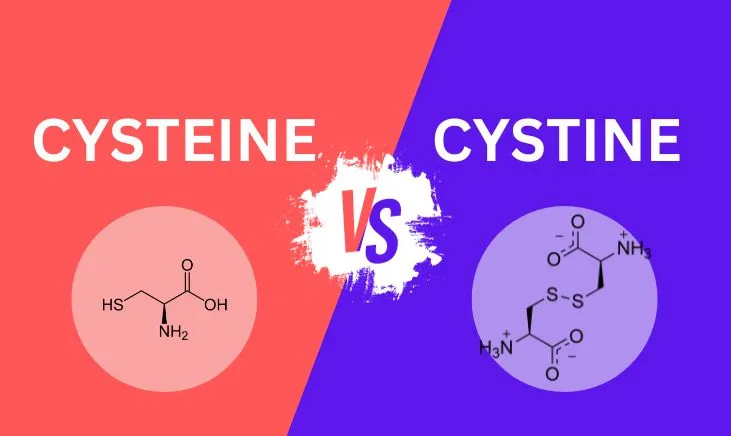
What’s the difference between cysteine vs cystine? Cysteine is a sulfur-containing proteinogenic amino acid that is conditionally essential. It is commonly found in dietary supplements with good bioavailability and has a role in hair growth. In contrast, cystine, composed of two cysteine molecules, has poor bioavailability, making it less ideal as a nutritional supplement.
Cysteine plays a vital role in glutathione synthesis and respiratory health. When two cysteine molecules combine, they form cystine through a disulfide bond. The primary function of cysteine is to serve as a substrate for the cystine-glutamate antiporter. This process increases cystine concentration inside cells, facilitating cystine transport, which is crucial for maintaining the redox cycle.
What Is Cysteine?
Cysteine is the reduced form of cystine. It is a conditionally non-essential amino acid that the human body can synthesize from methionine under normal circumstances. In its oxidized form, cystine plays a pivotal role in the redox cycle.
However, in certain conditions, such as total parenteral nutrition or specific metabolic disorders, cysteine becomes an essential nutrient that must be obtained through diet or supplements. It plays a critical role in protein synthesis, with its unique thiol group forming disulfide bonds, which is crucial for treating androgenetic alopecia by addressing diffuse effluvia and hair structure lesions by stabilizing protein structure. This amino acid is also vital for synthesizing the powerful antioxidant glutathione, which helps protect cells from oxidative stress.
The benefits of cysteine include treating androgenetic alopecia, promoting hair growth, and improving hair structure in both men and women.
There are two forms of cysteine: L-cysteine, which is found in food and synthesized by the body, and N-acetyl cysteine (NAC), an acetylated variant with increased bioavailability. NAC is commonly used in clinical settings to boost glutathione levels and as an expectorant to relieve respiratory symptoms. It may also have benefits for treating various psychiatric and neurological conditions linked to oxidative stress and inflammation. Additionally, the combination of L-cystine and vitamin B6 has been found to promote hair growth.
Cysteine’s role in maintaining optimal health is multifaceted, impacting hair health, respiratory function, and the body’s antioxidant defense system.
There are three categories of amino acids. Here’s a breakdown of each category and their respective amino acids.
| Essential | Non-essential | Conditionally essential |
|---|---|---|
| Phenylalanine | Alanine | Arginine |
| Valine | Aspartic acid (aspartate) | Cysteine |
| Tryptophan | Asparagine | Glutamine |
| Threonine | Glutamic acid (glutamate) | Glycine |
| Isoleucine | Selenocysteine | Proline |
| Methionine | Serine | |
| Histidine | Tyrosine | |
| Leucine | ||
| Lysine |
Top 3 Health Benefits of Cysteine
Understanding the health benefits of cysteine can improve comprehension of how this amino acid is essential for the human body as a whole. Here’s a brief rundown of the top health benefits of cysteine and NAC.
Boosts Glutathione Production

L-cysteine is crucial for glutathione (GSH) synthesis, an antioxidant that reduces oxidative stress by quenching free radicals. GSH helps prevent lipid peroxidation and cellular damage, playing a pivotal role in protecting against conditions related to oxidative stress, like atherosclerosis, diabetes, and cardiovascular diseases. N-acetyl-cysteine (NAC), a precursor to GSH, has similar benefits and may support immune function by boosting GSH levels.
Helps Stabilize Blood Sugar

L-cysteine may help regulate blood sugar by reducing inflammation and supporting insulin receptor function. Studies have shown that it can lower blood glucose levels and decrease vascular inflammation, potentially reducing the risk of developing type 2 diabetes. This property can contribute to better management of conditions associated with high blood sugar, such as heart disease and obesity, providing a guideline for the treatment of metabolic disorders.
Improves Symptoms of Respiratory Diseases

NAC’s antioxidant and expectorant properties can relieve symptoms of respiratory diseases like COPD and chronic bronchitis. It can thin mucus in the bronchial tubes and reduce inflammation, potentially easing wheezing, coughing, and airway constriction. By boosting GSH levels, NAC might improve lung function and reduce the frequency of respiratory attacks.
Supports Other Health Benefits
L-cysteine and NAC offer additional health benefits, including promoting hair growth and improving hair structure, enhancing gut health, boosting immune function, aiding detoxification, and potentially improving symptoms of psychiatric and addictive disorders. These diverse qualities make L-cysteine a valuable supplement for overall well-being.
What Is Cystine?
Cystine, the oxidized form of cysteine and classified as a conditionally non-essential dietary amino acid, is found in various tissues, including hair and skin, which contain 10-14% cystine. The system x transporter transports cystine into cells in exchange for glutamate, playing a critical role in cellular health.
As a protein residue, cystine is a site of redox reactions and a mechanical linkage for protein structure. Formed by two cysteine molecules linked by a disulfide bond, cystine is not as easily absorbed as cysteine but still plays a role in physiological processes, including cystine uptake and regulation of extracellular cysteine and cystine content. It serves as a substrate for the cystine-glutamate antiporter, increasing cystine concentration inside cells, and is quickly reduced to cysteine.
While cystine supplements exist, their bioavailability is lower than cysteine, and NAC supplements have a higher bioavailability than both.
Cystine Structure
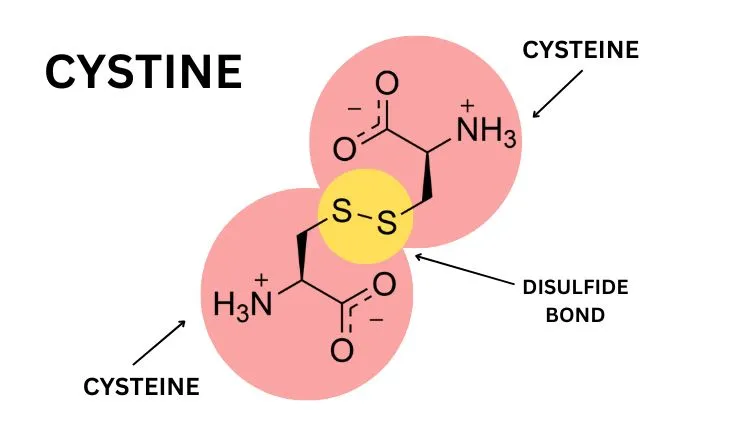
Cystine is created when two cysteine amino acids form a disulfide bond through oxidation, resulting in the following reaction: 2 HO2CCH(NH2)CH2SH + 0.5 O2 → (HO2CCH(NH2)CH2S)2 + H2O.
Apart from its disulfide bond, cystine has two amine groups and two carboxylic acid groups. This oxidized derivative of cysteine is found in various body tissues, including digestive enzymes, immune cells, skeletal and connective tissues, skin, and hair. Due to its lower bioavailability than cysteine, cystine isn’t commonly used in dietary supplements. The formation of the disulfide bond between cysteine molecules is significant for protein structure and cellular functions.
Difference Between Cysteine And Cystine
Yes, there is a big difference between cysteine and cystine.
Cysteine is a sulfur-containing proteinogenic amino acid found in several foods, such as poultry, eggs, dairy, red peppers, garlic, and onions, and contains a thiol group. Its primary role is as an antioxidant and glutathione precursor, meaning it’s heavily involved in regulating levels of oxidative stress in the body. N-acetyl cysteine, the synthetic form of cysteine, is widely researched for its clinical role in treating acetaminophen poisoning and some symptoms of Alzheimer’s disease.
On the other hand, an amino acid formed from two cysteine molecules linked together is known as cystine. It is more stable than cysteine, but some research suggests it may not be absorbed. Cystine is also a component of human hair keratins, skin, and nails, but there’s little evidence suggesting cystine supplements can improve hair, skin, or nail health.
Unlike cysteine and NAC, you’ll rarely find it as a dietary supplement due to its decreased cysteine content. Cysteine is unique amongst the 20 natural amino acids in that it can form disulfide bonds, which play a crucial role in the structure and function of proteins.
Take a look at the chart below to see the difference between cystine and cysteine. For example, cystine is a dimer formed from two cysteine molecules.
| Cysteine | Cystine | |
|---|---|---|
| Chemical formula | C3H7NO2S | C6H12N2O4S2 |
| Structure |  |
 |
| Soluble in | Water, acetic acid | Water, acetic acid |
| Bioavailability | Low (undergoes oxidation in the digestive tract) | Low |
| Uses | Antioxidant | Cystine-glutamate antiporter substrate |
| Glutathione synthesis | Antioxidant | |
| Expectorant | Clinical use for a range of disease states (chronic bronchitis, HIV, cardiovascular disease, etc.) | |
| Blood sugar stabilization | ||
| Cognitive health | ||
| Respiratory health |
Conclusion
Both cysteine and cystine are important amino acids in human health, and while they sound similar, they have different bodily functions. Cysteine is classified as a conditionally essential amino acid needed for several essential roles, from stabilizing blood sugar and improving respiratory symptoms to boosting immunity and modulating inflammation.
Conversely, cystine has some antioxidant functions but is used primarily as a substrate for transporting cystine-glutamate antiporter, increasing the cystine concentration inside cells. Cysteine is widely found in food and dietary supplements. Still, due to its low bioavailability, cystine is more challenging to come by in supplement form, making it an acid since the human body cannot produce it independently.
Frequently Asked Questions
Are cysteine and methionine similar?
How does cysteine become cystine?
How are cysteine and homocysteine related?
Cysteine and homocysteine are both sulfur‐containing amino acids. Homocysteine is an intermediate produced during the conversion of methionine into cysteine, emphasizing the role of cysteine as a conditionally non-essential amino acid since the human body can produce it under certain conditions.
While homocysteine and cysteine have important roles in the body, high homocysteine levels can become toxic to cells, resulting in health complications. Cysteine, with its thiol group, is crucial in reducing oxidative stress.