

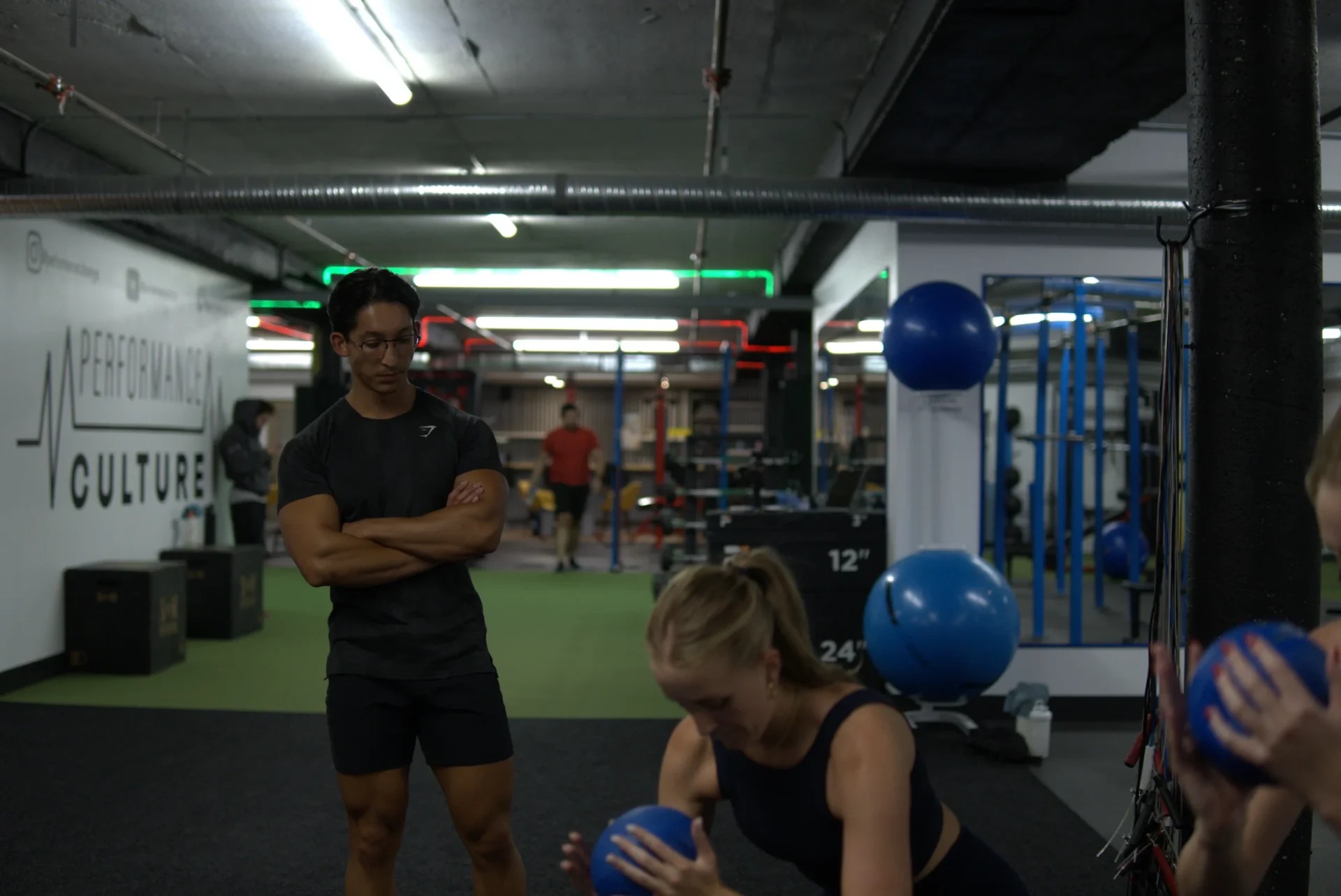
Proper exercise form separates effective training from wasted effort and potential injury. Personal trainers serve as movement experts who teach correct technique, identify compensations your body makes during exercise, and ensure every rep you perform builds strength safely. This article explains how trainers coach form, why technique matters more than weight lifted, and the methods used to ingrain proper movement patterns that protect your joints while maximizing muscle engagement.
Quick Takeaway:
- Personal trainers use visual demonstration, tactile cues, and real-time feedback to teach proper exercise technique
- Correct form prevents injury, increases muscle activation, and produces better results than lifting heavier weight with poor technique
- Trainers identify and correct movement compensations that can lead to pain or injury over time
Why Exercise Form Matters More Than Weight
Lifting heavy weight with poor form delivers worse results than lifting moderate weight with excellent technique. Poor form shifts stress away from target muscles onto joints and connective tissue, reducing the training stimulus while increasing injury risk.
Consider the squat. Correct squats build leg strength while protecting the knees and lower back. Squats with knees collapsing inward or excessive forward lean stress knee ligaments and lumbar spine instead of strengthening the legs.
Proper form also increases muscle activation. Research shows that correct technique activates target muscles more effectively than poor form with heavier loads. A properly performed pushup with full range of motion builds more chest and tricep strength than a half-rep pushup with added weight.
Quality trainers prioritize technique over ego lifting. They teach clients to master movement patterns at lighter weights before progressing load.
How Trainers Teach Proper Technique
Trainers use multiple teaching methods to help clients learn correct form. Different people respond to different cues, so effective trainers adapt their coaching style.
Working with a trainer often looks like this during workouts:
- Visual demonstration comes first. Your trainer performs the exercise while explaining key technique points, giving you a clear picture of what the movement should look like.
- Verbal cuing guides you through the exercise. Your trainer might say “push through your heels” during a squat or “pull your shoulder blades together” during a row.
- Tactile feedback involves light touch to help you feel correct positioning. A trainer might tap your core to remind you to brace or place a hand on your lower back to prevent excessive arching.
- Real-time correction happens throughout your training session. Your trainer watches every rep and provides immediate feedback when form breaks down.
Common Form Mistakes Trainers Correct
Certain form errors appear frequently across different exercises. Trainers stay alert for these common mistakes and correct them before they become ingrained patterns.
- Knee valgus, where knees collapse inward during squats or lunges, places excessive stress on knee ligaments. Trainers cue clients to push knees outward and may use resistance bands around the thighs to provide a physical reminder.
- Lower back arching during core exercises like planks or deadlifts shifts stress from the core to the lumbar spine. Trainers teach proper core bracing and neutral spine positioning to protect the back.
- Shoulder shrugging during pressing movements reduces effectiveness while increasing neck tension. Trainers cue clients to keep shoulders down and back, maximizing the training effect on intended muscle groups.
Incomplete range of motion limits strength development and flexibility gains. Trainers ensure clients move through full ranges safely, modifying exercises when mobility restrictions prevent proper form.
The Progression From Learning to Mastery
Learning proper form follows a predictable progression. During your first personal training session, you focus on understanding basic movement patterns. Your trainer breaks down each exercise into simple steps and coaches you through fundamental positions.
- Early training sessions involve continued practice with lighter weights. Your trainer provides constant feedback as you work to internalize proper technique. You’re building movement literacy, the ability to feel when your body is in correct position.
- As technique improves, your trainer gradually increases resistance. The challenge grows, but your movement patterns remain solid because you’ve built a strong technical foundation.
- Eventually, proper form becomes automatic. You can focus on effort and intensity because correct technique no longer requires conscious attention.
Form Breakdown Under Fatigue
Maintaining proper form gets harder as muscles fatigue. This is where a trainer’s watchful eye becomes especially valuable.
As you approach muscle failure, your body attempts to complete reps by recruiting other muscles or changing joint angles. A tired chest might cause shoulders to take over during pushups. Fatigued legs might cause lower back rounding during deadlifts.
Trainers recognize these compensations and end the set before form deteriorates to injury risk levels. They understand the difference between productive fatigue and dangerous form breakdown. When building custom workout programs, trainers set appropriate volume and intensity that challenges clients while maintaining safe form.
Technology and Video Analysis
Many trainers now use video analysis to help clients understand their form. Seeing yourself perform an exercise provides insights that verbal feedback alone cannot deliver.
- Your trainer might record your squat from the side to show you how far forward your knees travel or whether your back maintains neutral position. Video clearly shows movement patterns that feel different than they look.
- Slow-motion replay helps identify subtle form issues. A compensation that happens quickly during normal speed becomes obvious when played back slowly.
- Some trainers use apps that draw form lines over video, showing joint angles and comparing your position to ideal form. These tools make abstract concepts like “neutral spine” concrete and measurable.
Build Strength Safely With Expert Coaching
Exercise form and technique separate effective training from wasted effort. Personal trainers serve as movement coaches who teach proper patterns, correct common mistakes, and ensure you build strength without injury.
If you’re looking for a personal trainer in Calgary who prioritizes proper technique, our team at EverFlex Fitness specializes in teaching exercise form to clients at all fitness levels. We use proven coaching methods to help you master fundamental movement patterns, then progress you safely toward your strength and fitness goals. Stop guessing whether your form is correct. Work with experienced trainers who provide expert guidance to build strength safely and effectively. Contact us today to schedule your consultation and start training with proper technique.
Frequently Asked Questions
How long does it take to learn proper exercise form?
Basic movement patterns can be learned in a few sessions, but true mastery develops over weeks or months of practice. The timeline varies based on movement history, body awareness, and training frequency. Consistent coaching accelerates the learning process.
Can I learn proper form from online videos?
Videos provide general guidance but cannot give personalized feedback on your specific movement patterns. A trainer identifies your unique compensations and limitations, then coaches technique for your body. This individualized approach produces better results than generic video instruction.
What should I do if an exercise causes pain despite proper form?
Stop the exercise immediately and inform your trainer. Pain during exercise signals that something is wrong. Your trainer will assess the issue and modify the exercise or substitute an alternative movement that works the same muscles without discomfort.