

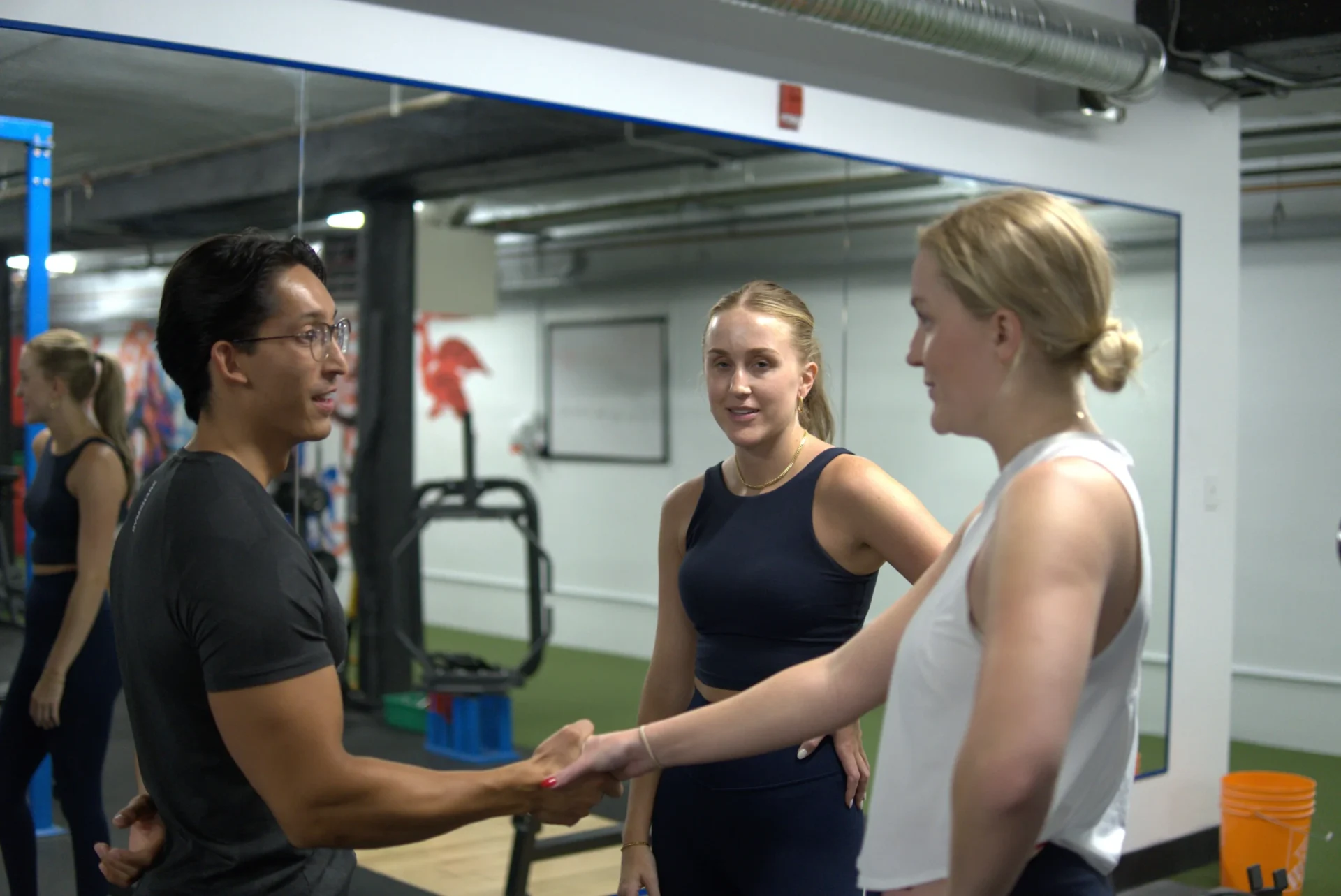
Walking into your first personal training session can feel intimidating if you don’t know what to expect. This initial meeting sets the foundation for your entire fitness journey. Your trainer will assess your current fitness level, discuss your goals in detail, teach you proper movement patterns, and outline the program tailored specifically to you.
Understanding what happens during this session helps you arrive prepared and get the most from your training.
Quick Takeaway:
- Your first session focuses on assessment, goal discussion, and movement evaluation rather than an intense workout.
- Trainers gather information about your health history, fitness background, and lifestyle to design safe and effective programming.
- You’ll learn proper form on basic exercises and leave with a clear plan for your training journey.
Pre-Session Paperwork and Health Screening
Your first session typically starts before you meet your trainer. Most facilities send health questionnaires covering medical history, current medications, past injuries, and conditions that might affect exercise choices.
This paperwork protects your safety by alerting your trainer to factors requiring exercise modifications. A history of lower back pain changes how your trainer approaches certain movements. Blood pressure medication might affect heart rate zones. Previous shoulder surgery means careful progression of upper-body exercises.
Calgary personal trainers use this information to customize your approach from day one. Being thorough and honest ensures your trainer designs the safest and most effective program for your situation.
Some trainers also ask about your schedule, stress levels, sleep quality, and nutrition habits. These lifestyle factors impact recovery capacity and influence program structure.
The Goal Setting Conversation
After reviewing your paperwork, your trainer sits down with you to discuss your goals in detail. This conversation goes deeper than “I want to lose weight” or “I want to get stronger.“
Your trainer asks specific questions to understand what success looks like for you. What weight do you want to reach, and by when? What activities do you want to do that you can’t do now? How will achieving your fitness goals improve your daily life?
This conversation establishes realistic timelines. Trainers explain what’s achievable based on your starting point and training frequency. Someone training twice weekly will progress differently than someone training four times weekly.
Your trainer also identifies potential barriers. Work conflicts, family obligations, and budget constraints all get discussed openly, so the program design accounts for these real factors.
Movement Assessment and Fitness Testing
The physical portion of your first session focuses on assessment rather than exhausting you with a hard workout. Your trainer needs to see how your body moves before designing programming that’s both effective and safe.
Movement screening typically includes basic patterns like:
- Squatting
- Hinging
- Pushing
- Pulling
- Rotating
Your trainer watches for mobility limitations, strength imbalances, or movement compensations that could lead to injury. Can you squat to full depth with good form? Do your knees track properly or collapse inward?
These observations directly influence exercise selection in your custom workout program. Limited hip mobility means your trainer includes mobility work and modifies exercises until range of motion improves. Weakness on one side means incorporating unilateral movements to address the imbalance.
Some trainers perform basic fitness tests to establish baseline measurements. This might include body composition, muscular endurance tests like planks, or cardiovascular assessments. These baseline numbers track your progress over weeks and months.
Learning Proper Exercise Form
Your trainer introduces fundamental movement patterns during the first session. Rather than running through a complete workout, you’ll learn proper form on key exercises that will appear in your program.
This might include learning how to hinge for deadlifts, understanding neutral spine for squats, or practicing the setup for rows and presses. Your trainer demonstrates each movement, explains technique points, and coaches you through the exercise with real-time feedback.
Mastering basic patterns in this first session pays dividends throughout your training. Good form from the start prevents bad habits, reduces injury risk, and increases the effectiveness of every rep.
Your trainer adjusts exercises to match your current ability. Can’t do a standard pushup? You’ll learn the incline or knee variation. Limited shoulder mobility? Your trainer shows modifications that work within your current range while building toward full movement.
Program Overview and Next Steps
Before your first session ends, your trainer outlines what your training will look like moving forward. This includes training frequency, session length, and the general structure of upcoming workouts.
You’ll learn about the progression timeline and answers to questions like:
- How often will your program change?
- When can you expect to increase weights or advance to more challenging exercises?
Your trainer explains their coaching style and what you can expect from the training relationship. Understanding your trainer’s approach helps you know what to expect in future sessions.
If you have homework between sessions, your trainer covers that too. This might include specific stretches, nutrition guidelines, or movement practice to reinforce what you learned.
What to Bring to Your First Session
Come dressed in comfortable athletic clothing that allows full range of motion. Avoid restrictive clothing that limits movement. Athletic shoes with good support are essential.
Bring a water bottle to stay hydrated. If you take medications or have medical conditions, bring relevant documentation or be prepared to discuss them in detail.
Additional Essentials for a Smooth First Session
Bring your questions, whether they are about equipment, training philosophy, or scheduling logistics.
Come with an open mind and realistic expectations, since the first session focuses on information gathering rather than proving your fitness level.
Be honest about your abilities and limitations so your trainer can design an effective program.
Start Your Fitness Journey With Professional Guidance
Your first personal training session establishes the foundation for your fitness journey. Through assessment, goal setting, and movement evaluation, your trainer gathers the information needed to design programming that fits your body, goals, and lifestyle.
Our Calgary personal training team at EverFlex Fitness thoroughly evaluates each client during their first session. We combine movement assessment, goal discussion, and hands-on coaching to create a clear path forward.
Ready to take the first step? Book your initial consultation and experience how personalized coaching accelerates your fitness results. Contact us today to schedule your first session.
Frequently Asked Questions
How long does the first personal training session last?
Most first sessions run 60 to 90 minutes. This allows time for paperwork review, goal discussion, movement assessment, and learning basic exercises. Some trainers offer shorter introductory consultations separate from the first training session.
Will I get a hard workout in my first session?
No. The first session prioritizes assessment and education over exhaustion. While you’ll move and learn exercises, intensity stays moderate so your trainer can evaluate form and abilities. Real training intensity builds in subsequent sessions.
Should I eat before my first personal training session?
Eat a light meal or snack one to two hours before your session. You need enough energy for movement assessment and learning exercises, but avoid eating heavily right before. Stay hydrated throughout the day.