

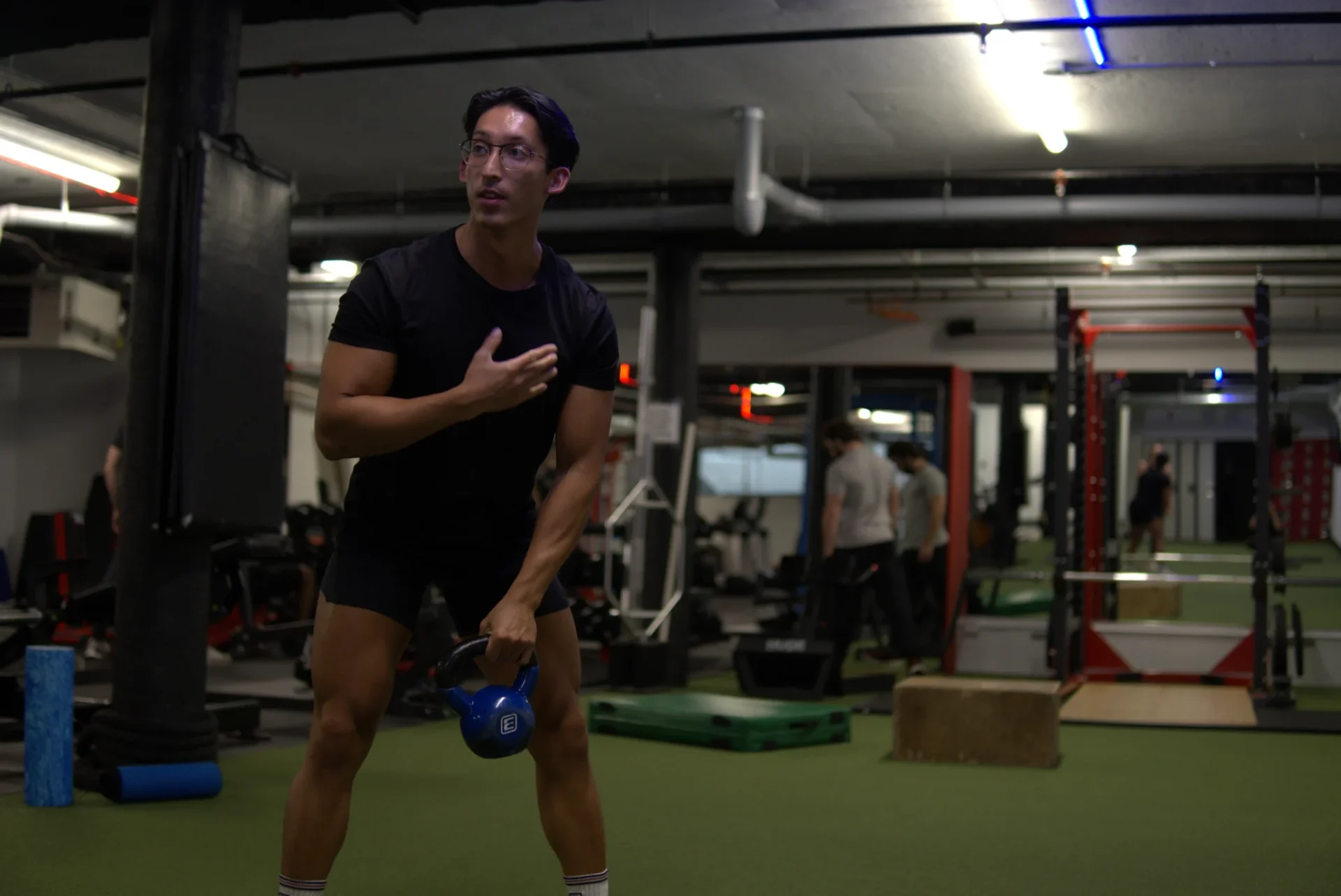
Static workout routines stop producing results once your body adapts to the stimulus. Personal trainers continuously modify your program based on how you respond, ensuring consistent progress toward your goals.
They adjust variables like exercise selection, volume, intensity, and frequency based on your recovery capacity, strength gains, movement quality, and changing circumstances. This responsive programming prevents plateaus and accounts for the reality that your needs today differ from those six weeks from now.
Key Insights:
- Trainers adjust programming variables weekly based on your body’s response to training stimulus and recovery patterns.
- Program adaptation addresses plateaus, prevents overtraining, and accommodates life changes that affect training capacity.
- Regular assessment of strength gains, movement quality, and recovery status guides intelligent program modifications.
Why Programs Need Regular Adaptation
The human body has the abilitiy to adapt to training stress through a process called supercompensation. During this process, the body not only adapts but actually overcompensates, resulting in impressive peaks in progress. After a workout creates stress, your body recovers and builds more capacity to handle that stress. Keep in mind, that once adapted, the same workout no longer creates sufficient stimulus to drive improvement.
Fixed programs prescribe the same exercises, sets, reps, and weights week after week. Initial progress happens, then stops as your body fully adapts. Trainers prevent this by adjusting programs before adaptation becomes complete. They increase the challenge as you get stronger, modify exercises as movement patterns improve, and change the training focus as different qualities develop. Integrating progressive overload is one such method, which enforces continous improvements by gradually increasing stressors like volume or intensity into workout programs to encourage adaptations.
Tracking Progress to Guide Changes
Effective program adaptation requires data. Trainers track multiple metrics to understand how your body responds.
Strength progression gets monitored by tracking weight lifted and reps completed. If you’re consistently adding weight or reps, the program works. If progress stalls for two to three weeks, changes are needed.
Movement quality assessment happens during every session. Your trainer watches for improvements in form and notes when you’re ready for more complex patterns.
Recovery indicators include sleep quality, energy levels, and muscle soreness. Poor recovery suggests the training load exceeds your capacity. Adequate recovery indicates room to increase the challenge.
Adjusting Training Variables
Trainers adjust key training variables to make sure your program keeps progressing without feeling repetitive. These adjustments help you build strength, skill, and confidence at the right pace.
- Exercise selection changes to keep training fresh. For example, swapping barbell squats for Bulgarian split squats to shift emphasis while still building leg strength.
- Volume adjustment through sets and reps, done by increasing volume to build work capacity and reducing volume when heavier loads take priority.
- Intensity modification based on how heavy the weight is relative to your capability, higher intensity for strength, moderate for muscle growth, and lower for recovery.
- Frequency changes to manage how often you train certain movements. Beginners often use full-body sessions, while advanced clients use more frequent split routines.
- Progressive overload is applied in small steps so your body adapts consistently without hitting unnecessary plateaus.
Responding to Plateaus
Progress rarely follows a straight line. Plateaus happen when adaptation catches up with poor programming, life’s stressors affect recovery, or technique limits prevent further loading.
When strength gains stop, trainers first examine form. Often, plateaus happen because you’re compensating rather than getting stronger. Fixing technique issues often restores progress without changing the program.
If form is solid, trainers might increase training frequency for that movement pattern or adjust volume and intensity, testing whether you need more total work or heavier loads.
Sometimes plateaus require complete exercise swaps. If bench press progress stalls, switching to dumbbell presses provides a new stimulus while still building pressing strength. Strategic deload weeks deliberately reduce training volume and intensity, allowing complete recovery from accumulated fatigue. This is why personal training works better than self-programmed training – knowing when to push and when to back off requires experience.
Adapting to Life Changes
Your training program integrates your lifestyle, not separate from it. Job changes, family obligations, increased stress, illness, travel, and schedule shifts all affect training capacity.
When work stress increases, trainers might reduce training volume while maintaining intensity. You continue building strength without adding recovery demands you can’t meet.
Travel disrupts training consistency. Before a trip, trainers might increase training frequency. During travel, they program shorter workouts using minimal equipment. After returning, they gradually restore normal programming.
Illness or injury requires immediate program modification. Trainers work around limitations, maintaining fitness in unaffected areas while allowing proper healing.
Managing Fatigue and Recovery
Accumulated fatigue from training, work, and life stressors affects your capacity to train and recover. Trainers monitor fatigue levels and adjust programming to prevent overtraining.
Signs of excessive fatigue include persistent soreness, decreased motivation, poor sleep, and declining performance. When these appear, trainers pull back intensity or volume to reduce training stress.
Strategic recovery weeks get programmed every four to eight weeks. These planned reductions allow your body to fully recover and often lead to increased strengths due to the alloted time for the body to recuperate and adapt.
Auto-regulation allows session-by-session adjustment. If you arrive fatigued, your trainer might reduce planned volume. If you’re feeling strong, they might add weight or sets.
Progressive Overload in Practice
Progressive overload means gradually increasing training demands over time. When building custom workout programs, trainers implement this through multiple strategies, not just adding weight to the bar.
Linear progression works for beginners. Adding five pounds per week to major lifts produces consistent gains for several months.
Undulating periodization varies workout intensity throughout the week. Monday might be heavy squats for five reps, Wednesday moderate weight for eight reps, and Friday light weight for twelve reps.
Block periodization structures training in focused phases. A strength block emphasizes heavy weights and low reps. A hypertrophy block uses moderate weights and higher volume.
Final Thoughts
Program adaptation separates effective training from wasted effort. Your body adapts to training stimulus, making the same workout progressively easier. Without systematic adjustment, progress stops.
Trainers use progress tracking, variable manipulation, and responsive programming to ensure your training evolves with your developing fitness capacity. This intelligent adaptation produces continuous improvement.
Start Training That Evolves With You
Stop following static workout plans that ignore how your body responds. EverFlex Fitness provides personalized training in Calgary that adapts to your progress, recovery capacity, and life circumstances.
Our trainers track your performance metrics, assess movement quality, and adjust your programming to help you progress toward your goals. We build programs that challenge you appropriately while setting up continued success.
Schedule your consultation and experience training that evolves with you. Contact us today to start your journey with responsive programming.
Frequently Asked Questions
How often should my workout program change?
Minor adjustments happen weekly or session-by-session based on performance and recovery. Significant program changes typically occur every four to eight weeks, though this varies based on your training experience and goals. The key is changing variables systematically rather than randomly.
Can I adapt my own program without a trainer?
Adapting your own program requires substantial knowledge of training principles, honest self-assessment, and experience recognizing when changes are needed. Beginners rarely have this expertise. Trainers bring objective observation and years of experience to guide appropriate adaptations.
What happens if I miss training sessions?
Trainers adjust programs based on missed sessions. One missed workout might mean repeating that session next time. Missing a week might require a modified transition week before resuming normal programming. Quality trainers adapt to reality rather than rigidly following predetermined plans.