

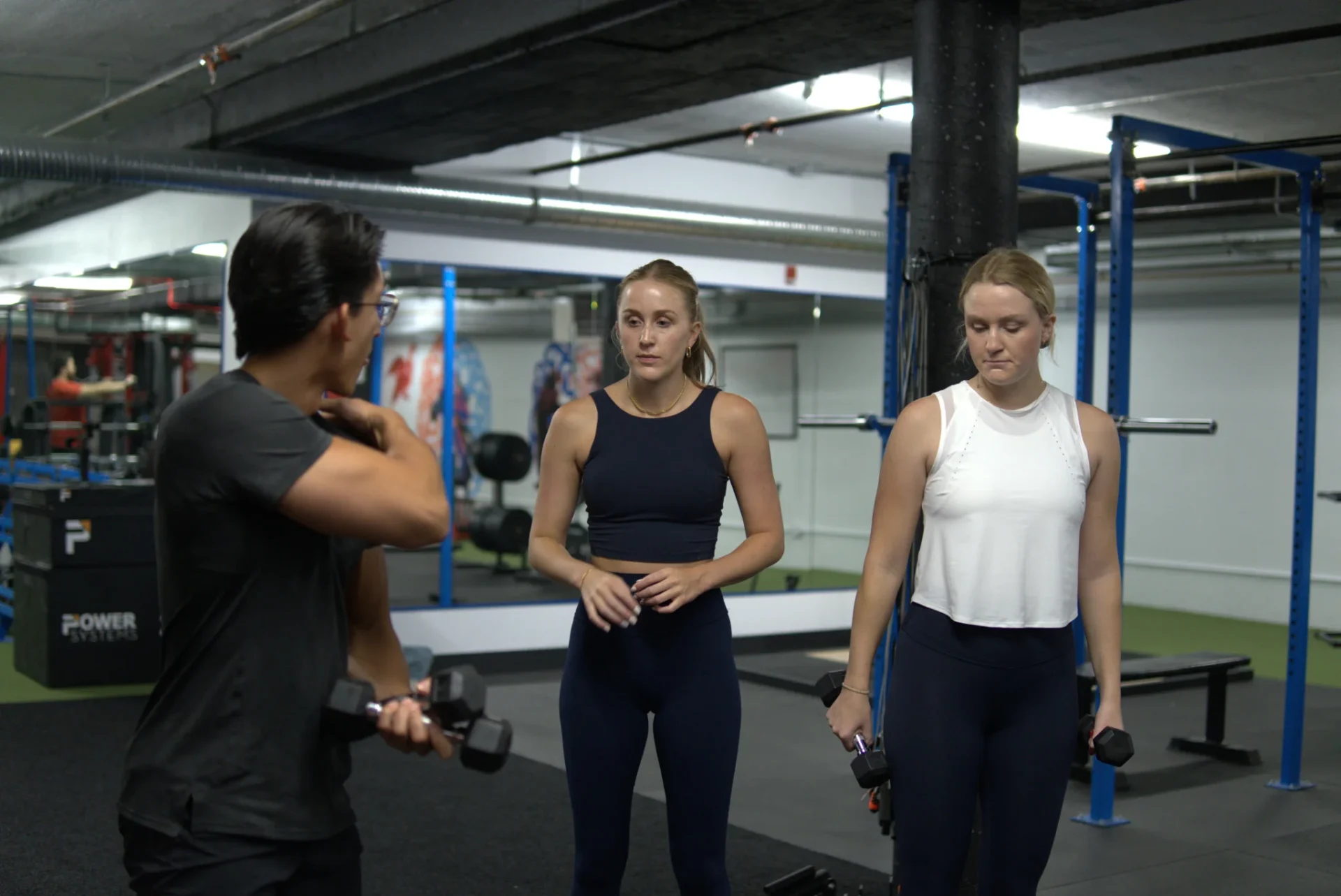
Walking into a gym for the first time and knowing where you stand fitness-wise can feel like a guessing game. Personal trainers remove that uncertainty through systematic assessment protocols that measure your current capabilities across multiple dimensions. These evaluations test strength, cardiovascular capacity, mobility, stability, and movement quality to establish baseline data. The information gathered shapes every decision about your training program, from exercise selection to intensity levels to progression timelines.
A thorough assessment prevents injury by identifying limitations before they cause problems, reveals asymmetries that need correction, and provides objective benchmarks for measuring progress. Understanding the assessment process helps you appreciate why trainers ask you to perform specific tests during what happens in your first personal training session.
Key Insights:
- Trainers use multiple assessment methods, including movement screens, strength tests, cardiovascular evaluations, and mobility checks, to build a complete fitness profile.
- Assessment results directly influence exercise selection, starting intensity, progression speed, and areas requiring corrective work.
- Baseline measurements provide objective data for tracking progress and adjusting programming based on how your body responds to training.
Why Comprehensive Assessment Matters
Trainers cannot design effective programs without getting a full picture of your starting point. Generic workouts ignore individual limitations and goals, minimizing desired progress.
Injury prevention starts with identifying movement dysfunction. If you can’t perform a bodyweight squat with proper form, loading that pattern creates injury risk. Proper form and execution are essential for engaging targeted muscle groups and promoting strength improvements.
Keep note that there are various ways to assess a client’s fitness journey.
- Baseline data makes progress measurable.
- Subjective feelings about improvement fluctuate.
- Objective numbers provide reliable evidence of change.
Individual variation means two people with similar goals need different programming. One person might have excellent mobility but poor stability. That’s why customized programming is so critical: it establishes a workout program tailored to where you are now to help build you up to where you want to be, health- and fitness-wise.
Movement Quality Screening
Movement screens evaluate how your body performs fundamental patterns. Trainers watch you squat, lunge, push, pull, and rotate to identify compensations and limitations.
During squat assessment, your trainer observes knee tracking, hip depth, ankle mobility, and torso position. Knees collapsing inward signal weak hip muscles. Limited depth might indicate tight ankles or hips.
Single-leg balance tests reveal differences in stability between the left and right sides of the body. Poor balance indicates weak stabilizer muscles or proprioception issues.
Overhead reach assessment checks shoulder mobility and thoracic spine extension. A limited range suggests tight chest muscles or restricted shoulder mobility. The objective is to understand how your body currently moves. As the trainer’s role in teaching exercise form and technique, assessment provides the foundation for targeted corrections.
Strength and Power Testing
Implementing a strength assessment helps determine how much force your muscles can produce. Trainers use various methods depending on your experience level. Beginners might perform bodyweight tests to reduce injury risk and assess form. Pushup capacity, plank holds, or bodyweight squats reveal baseline strength without injury risk.
Experienced clients might perform one-rep max testing or estimate maximum strength through submaximal loads. This helps trainers calculate appropriate training weight load for customized programming.
Power assessment tests explosive strength through vertical jumps or medicine ball throws. This is used to assess current athleticism for goals that require power and speed.
Muscular endurance is tested through higher-rep protocols. The number of pushups you can perform before failure indicates your endurance capacity and guides rep ranges in your program.
Cardiovascular Fitness Evaluation
The cardiovascular assessment determines how efficiently your heart and lungs deliver oxygen during exercise. Assessing cardiovascular fitness is crucial as it impacts training intensity and recovery needs.
- Resting heart rate provides baseline cardiovascular fitness data. Lower resting rates generally indicate better conditioning. Tracking changes is necessary to observe adaptation to training.
- Submaximal testing estimates cardiovascular capacity safely. Step tests measure heart rate recovery after exertion. The faster your heart rate drops, the better your cardiovascular condition.
- The talk test assessment determines the appropriate cardio intensity. If you can speak in full sentences during exercise, intensity is moderate. If you can only say a few words, intensity is high.
Flexibility and Mobility Assessment
Flexibility measures how far joints move passively. Mobility measures how far you can actively control movement. Having healthy mobility and flexibility is critical for injury prevention and optimized performance.
- Hamstring flexibility testing reveals whether tight hamstrings limit hip movement. Restrictions affect deadlift form, squat depth, and injury risk.
- Hip mobility screening checks rotation, flexion, and extension. Limited hip mobility forces the lower back to compensate during squats and deadlifts.
- Ankle dorsiflexion range affects squat depth. Restricted ankles prevent proper depth or excessive knee-forward movement.
- Shoulder range testing evaluates flexion, rotation, and extension. Asymmetries between sides indicate imbalances needing correction.
Body Composition Analysis
Body composition reveals the proportions of muscle, fat, bone, and water in your body. This provides more thorough information to track fitness progress than body weight alone.
- Circumference measurements track changes in specific areas. Waist, hip, chest, arm, and thigh measurements show where you’re losing fat or building muscle.
- Skinfold caliper testing estimates body fat percentage by measuring subcutaneous fat.
- Progress photos from consistent angles capture changes that numbers sometimes miss. Photos reveal muscle definition and overall physique changes.
The purpose of body composition analysis is to determine whether training is producing the desired physical changes and, if necessary, to adjust programming if progress stalls.
Lifestyle and Recovery Factors
Sleep quality, stress levels, nutrition habits, and daily activity all impact training quality.
- Sleep habits directly affect recovery and performance. Trainers ask about sleep duration and quality. Poor sleep limits how hard you can train and how well you recover.
- Stress inventory reveals whether life stressors deplete recovery resources. High-stress periods require reduced training volume as recovery quality may be insufficient and raise injury risk.
- Nutrition patterns affect energy and recovery. Trainers assess eating frequency, protein intake, and hydration habits.
Previous injury history reveals potential problem areas requiring caution. Knowing this history prevents reinjury through smart exercise selection.
Using Assessment Data for Programming
Assessment information directly shapes every programming decision. Data translates into specific training choices that address your needs and where you are in your fitness journey.
- Exercise selection gets tailored to what your body can currently handle. If the assessment shows limited ankle mobility, your trainer may start with goblet squats using a heel lift rather than barbell back squats.
- Starting intensity is calibrated to current capacity. Assessment determines appropriate starting weights and volumes that challenge without becoming overwhelming.
- Corrective exercises are incorporated based on movement screen results. If the assessment reveals weak glute muscles, your program may include glute activation work.
- Recovery needs are factored into session frequency. Someone sleeping poorly needs more recovery time between sessions. Assessment helps trainers program appropriate frequency.
Final Thoughts
Fitness assessments provide the information trainers need to design effective, safe workout programs. Testing reveals strengths to leverage, weaknesses to address, and limitations to respect.
Assessments aren’t about judgment. It’s about gathering data that makes your training more effective while keeping you healthy and up to par.
Start With a Professional Assessment
Stop guessing what your body needs and start training based on real data. At EverFlex Fitness, our Calgary personal trainers perform comprehensive assessments that reveal exactly where you stand.
We evaluate movement quality, strength, cardiovascular fitness, mobility, and lifestyle factors to build a complete picture. This information shapes every aspect of your personalized program.
Schedule your assessment consultation today and experience training built on solid data.
Frequently Asked Questions
How long does a fitness assessment take?
Initial assessments typically require 60 to 90 minutes. This includes paperwork review, goal discussion, movement screens, strength tests, and mobility checks. Thorough assessments take time but provide essential information for effective programming.
Do I need to be in shape before getting assessed?
No. Assessments meet you where you are currently. Tests get scaled to your abilities. The purpose is awareness of your starting point, not to test limits.
How often should fitness assessments be repeated?
Reassessments every 8 to 12 weeks track progress and guide program adjustments. Testing too frequently doesn’t provide enough time for measurable changes.