

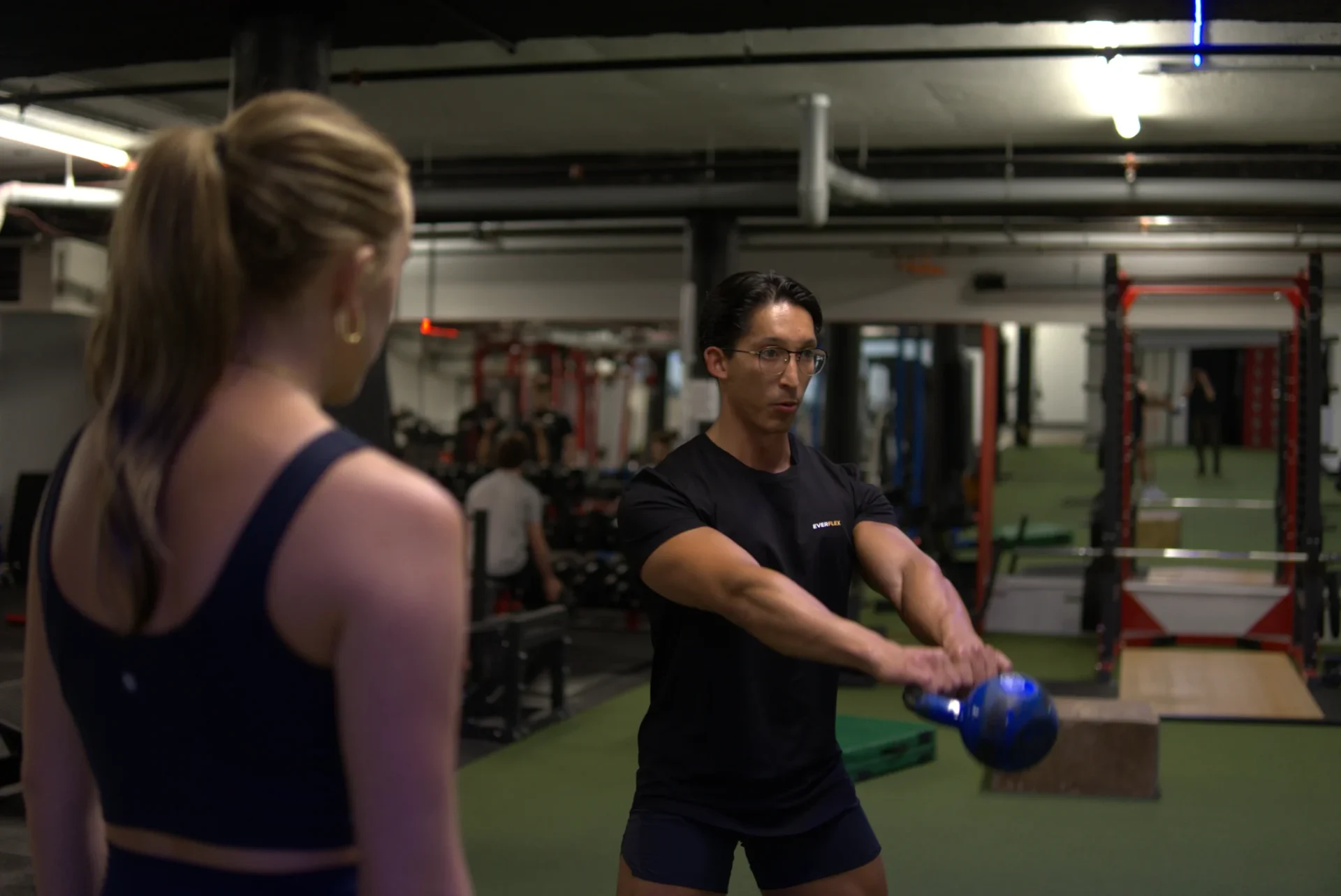
Strength training intimidates newcomers more than any other fitness activity. The weight room feels foreign, the equipment looks complicated, and injury concerns keep people away. Personal trainers eliminate these barriers by providing structured guidance throughout every aspect of strength development.
Working with a trainer means learning proper technique from the start, following progressive programs designed for your goals, receiving real-time feedback that prevents bad habits, and building confidence through systematic skill development. The experience differs dramatically from guessing your way through random exercises or following generic programs.
Trainers accelerate strength gains by optimizing training variables you might not understand on your own, preventing wasted time and frustration. This systematic guidance produces better results faster while establishing knowledge that serves you long after formal training ends.
Key Insights:
- Strength training with a trainer begins with mastering technique with lighter weights before progressing to heavier loads that challenge strength limits.
- Trainers manipulate sets, reps, tempo, rest periods, and exercise selection based on whether your goal is maximum strength, muscle size, or endurance.
- Expect consistent progression through systematic increases in weight, volume, or difficulty as your body adapts to training stimulus.
Your First Strength Training Sessions
Early sessions focus on movement quality rather than the weight lifted. Your trainer teaches proper setup, body positioning, and movement execution for fundamental exercises. This foundation prevents the development of bad habits that become harder to correct later.
Expect to use weights that feel easy initially. The light load allows you to concentrate on technique without fatigue interfering. Your trainer watches every rep and provides cues that refine your movement patterns. How personal trainers assess your fitness level during initial sessions reveals starting points for different exercises. These assessments guide exercise selection and modification strategies. First sessions also establish baseline strength measurements that provide comparison points for tracking future progress.
Learning Fundamental Movement Patterns
Strength training revolves around several basic movement patterns. Trainers systematically teach squatting, hinging, pushing, pulling, and carrying, ensuring competence before advancing to more complex movements.
Squatting movements train legs and hips through vertical loading. Variations include back squats, goblet squats, and split squats. Your trainer selects variations matching your mobility and experience level. Hinging movements like deadlifts train the posterior chain through hip extension. Proper hinging requires moving through the hips while maintaining neutral spine positioning.
Pushing exercises develop the chest, shoulders, and triceps through various pressing angles. The trainer’s role in teaching exercise form and technique becomes especially important in pressing movements where shoulder health depends on proper mechanics. Pulling movements balance pushing work and train back muscles, requiring an understanding of how to initiate movement from the back rather than the arms.
Progressive Overload in Practice
Strength gains require progressive overload, a training method that gradually increases training stress to prevent plateaus. Your trainer manages this progression systematically rather than randomly adding weight. Several variables create progressive overload. Weight increases are an obvious option, but not the only one. Adding reps, increasing sets, or advancing to more complex variations all provide progression pathways.
How personal trainers build custom workout programs includes planning progression timelines based on training age. Beginners often add weight weekly, while advanced lifters might progress monthly. Deload periods get programmed strategically. After several weeks of increasing demands, lighter training weeks allow recovery and prevent accumulated fatigue.
Program Structure and Periodization
Strength programs follow structured progressions rather than random workouts. Trainers organize training into blocks, focusing on specific qualities before transitioning to new emphases. A typical structure might include a hypertrophy phase, building muscle mass, followed by a strength phase, lifting heavier weights for fewer reps.
Within the weekly structure, the order of exercises matters. Compound movements requiring the most energy come first when you’re fresh. Isolation exercises targeting specific muscles come later. Training frequency depends on experience level. Beginners might train full body three times weekly. Intermediate lifters often use upper- and lower-body split training four days a week.
Tracking Strength Progress
Measurement makes progress objective. Your trainer records weights, reps, and sets for all exercises, creating performance data that reveals adaptation trends. Strength testing is conducted periodically, either through planned max attempts or estimated maximums from submaximal lifts.
Gaining muscle while losing fat indicates successful training, even if body weight stays constant. Performance improvements in daily activities validate the effectiveness of training. Carrying groceries gets easier, and climbing stairs becomes less taxing.
Common Strength Training Mistakes Trainers Prevent
Several errors limit strength development. Ego lifting is using weights that are too heavy to maintain proper form, just to impress others. This creates injury risk and reduces training effectiveness.
Your trainer keeps weight selections appropriate for your current capabilities. Neglecting weak points allows imbalances to persist. Trainers identify these weak links and program specific exercises to address deficiencies.
Inconsistent technique produces inconsistent results. Changing squat depth or bench press bar path between sessions makes comparing performance impossible. Inadequate recovery between sessions limits adaptation. Your trainer programs the appropriate training frequency based on your recovery capacity.
What Strength Gains Look Like
Realistic expectations prevent frustration. Beginners experience rapid strength gains initially. Neurological adaptations improve muscle recruitment efficiency before actual muscle growth occurs. These gains may include increasing the weekly weight load for several months.
Intermediate lifters see slower but steady progress. Adding five pounds monthly to major lifts becomes normal. Women and men gain strength differently. Women typically plateau at lower absolute weights due to hormonal differences, but relative strength gains remain comparable. Age affects the speed of strength development, but doesn’t prevent gains. Older adults build strength effectively with appropriate programming, though recovery needs increase.
Nutrition and Recovery Guidance
Outside of training, the quality of your nutrition and recovery is detrimental to the success of your fitness journey. Strength development requires supporting training through proper nutrition and recovery.
- Protein intake supports muscle repair and growth. Trainers recommend 0.7 to 1 gram per pound of body weight daily. Timing matters less than total daily intake.
- Caloric needs increase with training demands. Building strength while losing significant weight proves difficult because caloric deficits limit recovery capacity.
- Sleep quality dramatically impacts strength gains. Muscle repair and hormone production occur during sleep. Consistent seven to nine hours of nightly sleep support training adaptation.
- Stress management affects recovery capacity. Your trainer adjusts training intensity based on your current stress levels.
Final Thoughts
Working with a personal trainer transforms strength training from guesswork into systematic skill development. The structured approach addresses technique, programming, progression, and recovery factors that determine results.
Trainers accelerate your learning by teaching proper mechanics from the start, preventing inefficient trial-and-error that wastes months. The relationship provides both immediate guidance and long-term education that builds independence and sustainability.
Build Real Strength With Expert Guidance
Ready to develop strength that changes how your body performs? EverFlex Fitness provides personal training in Calgary that specializes in systematic strength development. We teach proper technique, design progressive programs, and provide accountability and expertise that turn effort into genuine gains.
Whether you’re new to strength training or looking to break through plateaus, our coaches create the structure you need. Schedule your consultation and discover what professional guidance can accomplish.
Frequently Asked Questions
How long until I see actual strength gains from training?
Neurological adaptations produce noticeable improvements within two to four weeks. You lift more by recruiting muscle fibers more efficiently before muscle growth occurs. Visible muscle size changes typically require eight to twelve weeks of consistent training.
Should I feel sore after every strength training session?
Muscle soreness indicates tissue damage, but doesn’t determine effectiveness. Beginners experience significant soreness initially. This diminishes as your body adapts. Effective workouts can occur without soreness, especially as you become more trained.
Can I build strength while losing fat simultaneously?
Yes, particularly for beginners or those returning after breaks. Strength gains continue during moderate caloric deficits, though the rate of improvement slows. Your trainer adjusts expectations based on whether you’re prioritizing fat loss or maximum strength development.